
This blog post will provide Managed Service Providers (MSPs) with 10 essential tips for conducting phishing simulations in 2024. We'll cover the importance of realistic scenarios, using up-to-date phishing tactics, training users frequently, tracking and acting upon results, and much more to enhance your simulated phishing campaigns.
While we will be using CanIPhish in this guide, the knowledge and techniques we share are not platform-specific. Whether you're an experienced MSP or just starting out, these tips are designed to be adaptable to any phishing simulation platform worth its salt. They will help you enhance your cybersecurity strategies and protect your clients' data.
Let's dive in to our top 10 tips for MSPs!
#1 Utilize the Latest Phishing Tactics
Cybercriminals constantly evolve their tactics, making it essential for MSPs to stay updated with the latest phishing techniques to create realistic simulations. Your clients rely on you to keep your finger on the pulse, which means regularly reviewing cybersecurity reports, attending industry conferences, and being active in online communities related to cybersecurity.
CanIPhish publishes regular updates to its content, ensuring you have access to the most current phishing scenarios and emerging threats. From new phishing content to training modules, CanIPhish provides a continuous stream of fresh content to keep your simulations relevant and your training effective. By leveraging these updates, you can ensure that your phishing simulations are always one step ahead of the cybercriminals, providing your clients with the best possible protection.
#2 Use Different Phishing Content For Different Roles
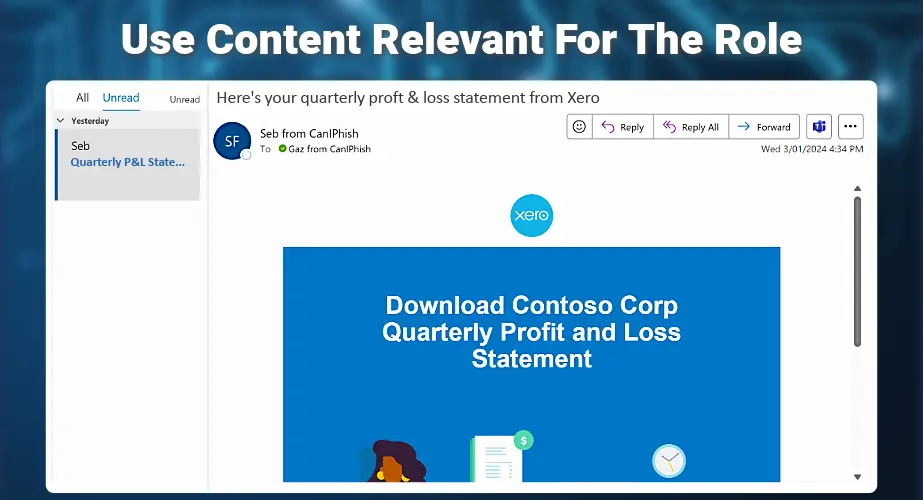
Each role within an organization faces different types of phishing threats. By setting your phishing simulations up to target specific roles, such as executives, finance personnel, and IT staff, you can help employees recognize threats relevant to their job functions. This tailored approach not only makes your simulations more realistic but also enhances the overall effectiveness of your training.
With CanIPhish, you can create employee lists and attach them to relevant campaigns. This allows you to tailor each campaign based on its intended recipients. For instance, executives might receive sophisticated spear-phishing emails, while finance personnel could be targeted with fake invoices or financial scams.
#3 Send Simulations that Match Users' Phishing Detection Abilities
To maximize the effectiveness of your phishing simulations, it's crucial to send simulations that align with each user's ability to detect phishing. Utilizing CanIPhish, you can create "dynamic lists" that categorize users based on their phish-detecting skills. Employees move between these lists depending on their interactions with phishing content.
Here's how it works: Employees who frequently fall for phishing attacks see an increase in their "phish risk" score. These high-risk employees should receive more frequent, easier-to-detect simulated phishing emails and additional training assignments aimed at improving their detection skills.
The goal is for users to improve their skills and reduce their risk to the organization. Once they improve, they will de-risk themselves and receive less frequent, harder-to-detect phishing emails. By continually adjusting the difficulty and frequency of simulations based on individual performance, you can help employees build their phishing detection capabilities effectively, creating a more secure organizational environment.
#4 Use Realistic Scenarios Relevant to Your Customers Technology and Language
Creating phishing simulations that mirror real-world scenarios relevant to your company's technology and language is crucial for effective training. Employees are more likely to engage with and learn from simulations that feel authentic and applicable to their daily tasks. Realistic scenarios help employees recognize and respond to actual threats they might encounter, thereby enhancing their overall cybersecurity awareness.
CanIPhish excels in this area by providing a wide range of ultra-realistic email templates and phishing pages that cover an extensive array of services. This variety ensures that your simulations can mimic the types of emails and websites your employees are likely to see, making the training more relevant and impactful. All emails are 100% customizable, allowing users to fine-tune the email to match the company's tone and language.
Pro Tip: Take advantage of CanIPhish's free Security Awareness Program Generator to automate relevancy. This tool takes basic information about the target company and automatically creates campaigns with relevant content tailored to its specific needs. Using this tool, you can quickly set up comprehensive phishing simulation programs that are finely tuned to the organization's unique environment, maximizing the effectiveness of your service.

#5 Train Often
Phishing simulations should be part of a regular training program. The more often employees practice, the better they get at spotting phishing attempts. Regularly updated training sessions that include new threats help keep everyone on their toes and improve their detection skills.
Studies show that repetition is key to learning and retaining information. By repeatedly exposing employees to phishing simulations, you help them internalize the knowledge and develop a keen eye for spotting phishing attempts. It's like muscle memory – the more you do it, the better you get at it.
With CanIPhish, you can easily set up recurring training sessions, ensuring that your customers employees get regular practice. Plus, you can seamlessly add new employees to ongoing campaigns, so everyone stays up-to-date. Keeping a steady flow of training sessions, packed with the latest phishing tactics, will ensure your cusomters employees are always ready to defend against cyber threats.
#6 Track and Analyze Results
After conducting a phishing simulation, it's crucial to examine the results. Key metrics like the number of employees who fell for the phishing attempt, their completion of supplementary training, their scores, and who might need additional support must be tracked. Understanding which types of phishing material were the most effective also helps you fine-tune your approach.
CanIPhish makes this easy with its comprehensive reporting capabilities. Every click, open, and response is tracked and recorded, giving you detailed insights into your team's performance. You can even automate these reports to be sent directly to management or have detailed reports come your way. This means you're always in the loop and can quickly address any weaknesses. Regularly analyzing these results can improve your phishing simulations and better protect your clients from cyber threats.
#7 Provide Immediate Feedback
When an employee falls for a phishing simulation, providing immediate feedback is key. Explaining what they missed and how they can avoid similar mistakes in the future helps reinforce learning while the experience is still fresh. Those moments right after an employee falls for a phishing attack are crucial – they're vulnerable and highly engaged, making it the perfect time for a teachable moment.
CanIPhish offers immediate feedback by default and even walks the user through the exact email they fell for and highlights the red flags they missed. This immediate feedback helps them understand their mistake and learn how to spot similar attacks in the future. By delivering timely, relevant feedback, you can turn each phishing simulation into a powerful learning experience.
#8 Keep Simulations Unpredictable
If phishing simulations become predictable, employees might tune them out. To keep everyone on their toes, vary the timing and complexity of your simulations. The element of surprise helps simulate real-world conditions more accurately, making the training more effective.
Unpredictability is also key to combating alert fatigue. When employees receive too many predictable or similar alerts, they can become desensitized and may start ignoring them altogether. By mixing things up, you can keep their attention sharp and their responses swift.
CanIPhish makes it easy to keep simulations unpredictable. You can randomize the delivery and spread your campaigns over a period of time. This ensures that employees never know when the next simulation might come, keeping them vigilant and engaged. By maintaining an element of surprise, you can more effectively prepare your team for real-world phishing attacks.
#9 Create Custom Content
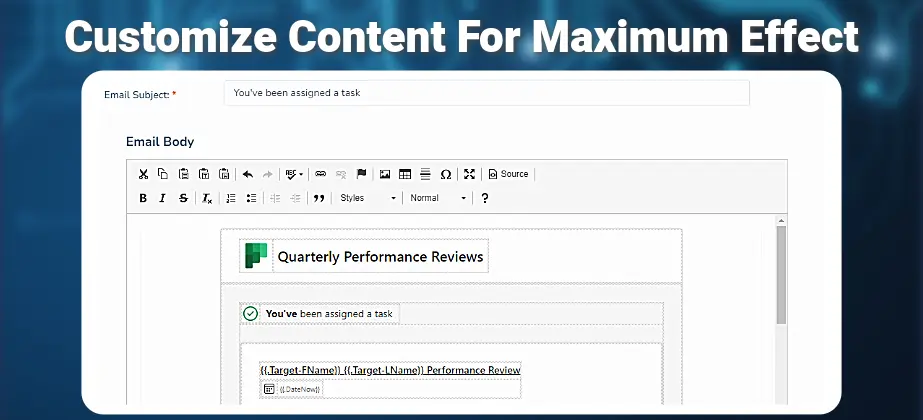
Creating phishing simulations that are highly relevant and targeted to your specific customers can make your training much more effective. By putting in the effort to customize the content, you can launch truly impactful phishing campaigns that help organizations understand that they are not immune to phishing attacks.
CanIPhish provides a wealth of customizable content to help you achieve this. The platform offers readily customized email templates, allowing you to tailor the content to reflect your customer's unique environment and challenges. Additionally, CanIPhish supports customized sender profiles and advanced phishing techniques like domain spoofing, making your simulations as realistic as possible. By creating content that hits close to home, you can help your clients see the real risks and stay sharp against phishing threats.
#10 Don't Wing It
When it comes to phishing simulations, don't just wing it. Take full advantage of the tools and resources offered by your phishing platform. Most platforms come with knowledge bases and customer support to help you out.
CanIPhish is designed to be a self-serve, user-centric platform packed with everything you need to run effective simulations. It offers a massive amount of walkthroughs, best practice guides, and even a program generator that can implement best practices for you. By leveraging these resources, you can ensure your phishing campaigns are top-notch and truly effective without having to figure it all out on your own.
Conclusion
As an MSP, you play a crucial role in the fight against phishing. Your customers rely on you to upskill their teams and protect their organizations from ever-evolving threats. By utilizing these tips and the powerful features of CanIPhish, you can create effective, realistic, and impactful phishing simulations.