10 Reasons Why Smart Employees Fall For Phishing Attacks

Are you wondering why smart employees are still falling for phishing attacks?
In this blog, we’re listing the 10 reasons why phishing works, even on people who know what to look for.
Falling for a phishing email does not automatically mean someone is careless, gullible, or asleep at the keyboard. It usually means a normal-looking email caught someone in a very human moment.
Unfortunately, this issue is only getting worse. Phishing attacks are getting smarter, cleaner, and far more convincing than the clumsy junk people were laughing at a few years ago. These days, the best phishing emails don’t scream scam. They blend in.
That means even smart employees can get caught because attackers are getting more efficient at abusing timing, trust, urgency, and routine.
Let’s dive in.
1. The phish turned up at the worst possible time
Timing is everything.
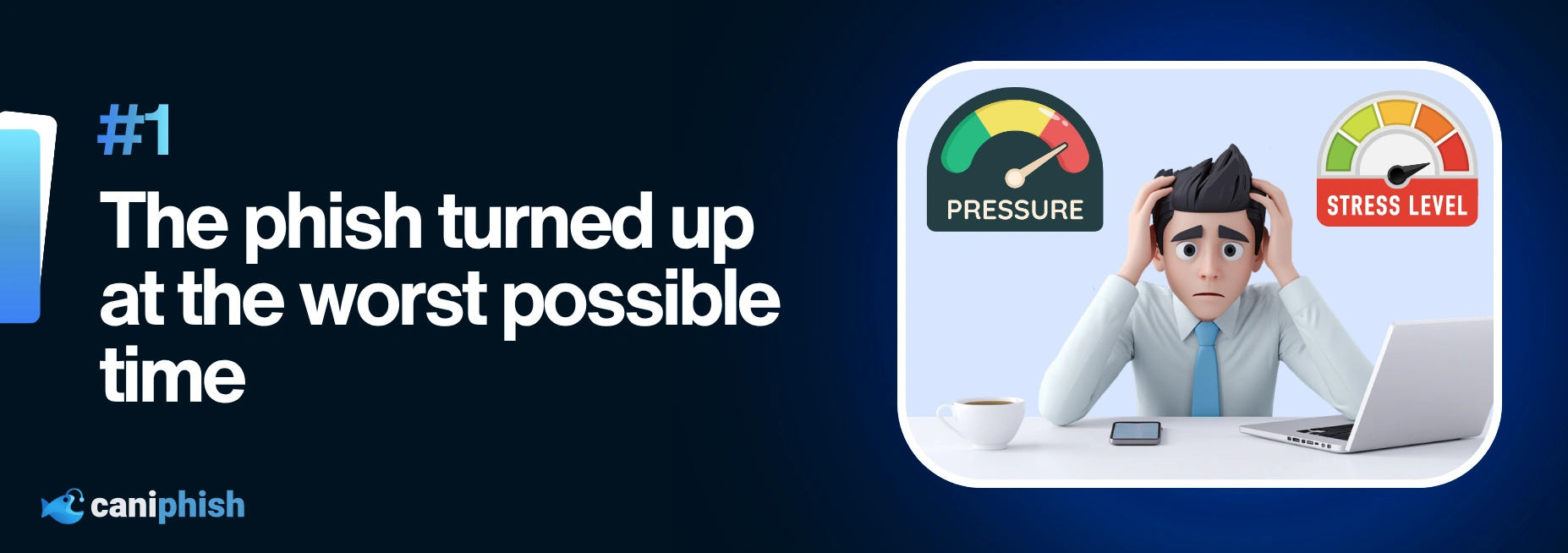
A phish doesn’t need to be brilliantly crafted. All it needs is to land on someone who is tired, distracted, stressed, running from meeting to meeting, or trying to function on airport coffee and bad decisions. In these moments, people aren’t studying every single email, as if it were evidence in a murder trial. They’re just trying to get through the day.
In that state, small warning signs become much easier to miss.
An exhausted employee is more likely to skim over emails. A distracted one is more likely to miss the tiny warning signs. A stressed one is more likely to react quickly to get it off their plate.
So the phish does not need to be perfect. It just needs to arrive at the moment when the target is mentally stretched, short on time, and more likely to act on instinct than slow down and think. The right phish arriving at the wrong time can catch almost anyone off guard.
2. They were already expecting an email
This is where phishing starts to get sneaky.
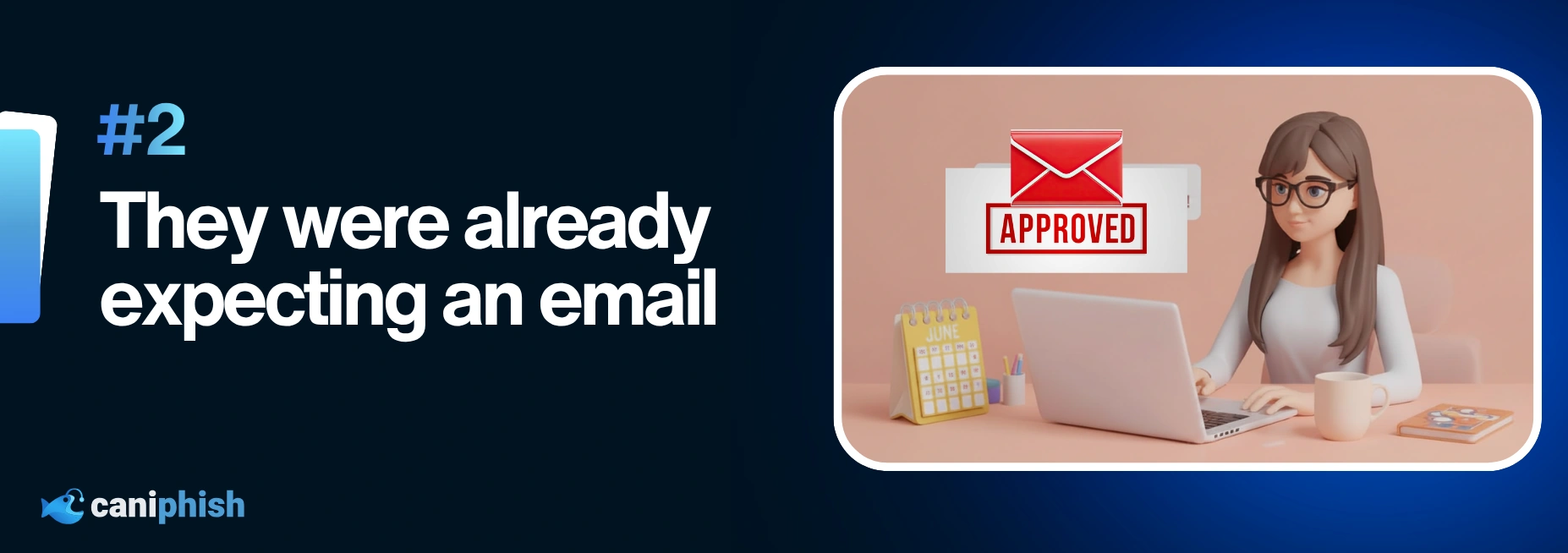
If an employee is expecting a message from a courier, payroll system, email provider, cloud platform, or software vendor, the fake email already has a head start. It’s not random. It’s familiar because it was anticipated. It fits naturally into the employee’s workday.
That drops their guard even before they realize it.
A fake delivery update on the day you’re expecting a package feels believable. A fake Microsoft login prompt feels annoying but normal after having password issues. A fake invoice from a known vendor can blend into the usual admin noise.
That is the kind of timing attackers aim for, because it slides neatly into real-life events already underway.
3. The email created just the right amount of urgency
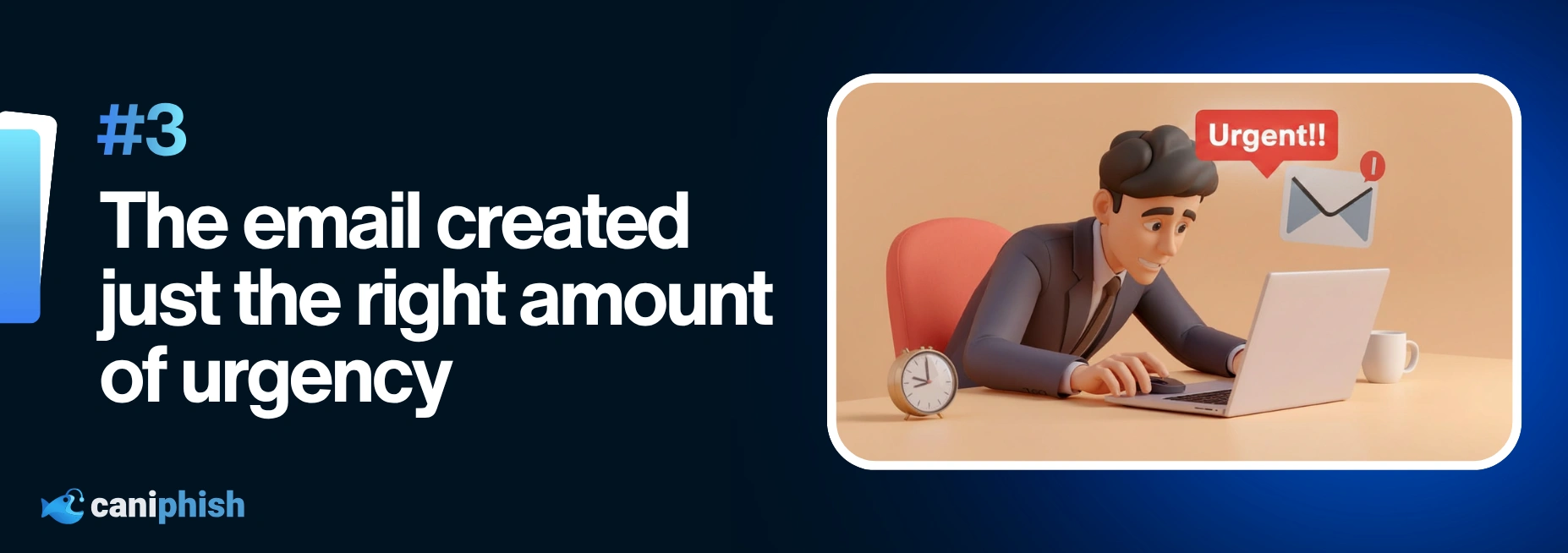
Have you ever opened an email, felt that little stab of urgency, and thought, “Ugh, I’d better deal with this now”? That initial sense of urgency can quickly override careful judgment. That’s why so many phishing attempts are successful, because they address an immediate issue.
"Your account needs attention, or you may be temporarily locked out."
"Your payment is overdue, and a late fee has been added to your account."
"A message couldn’t be delivered."
"A service has been restricted."
Messages like this don’t usually trigger full panic mode. But it’s usually enough to make you want to sort it out as soon as possible.
And once that happens, the brain stops carefully reviewing and starts reacting quickly to avoid consequences.
That’s the sweet spot for phishing. Getting the user to take action before they stop to question the sender, hover over the link, or notice that something feels slightly off.
4. It looked like a trusted provider
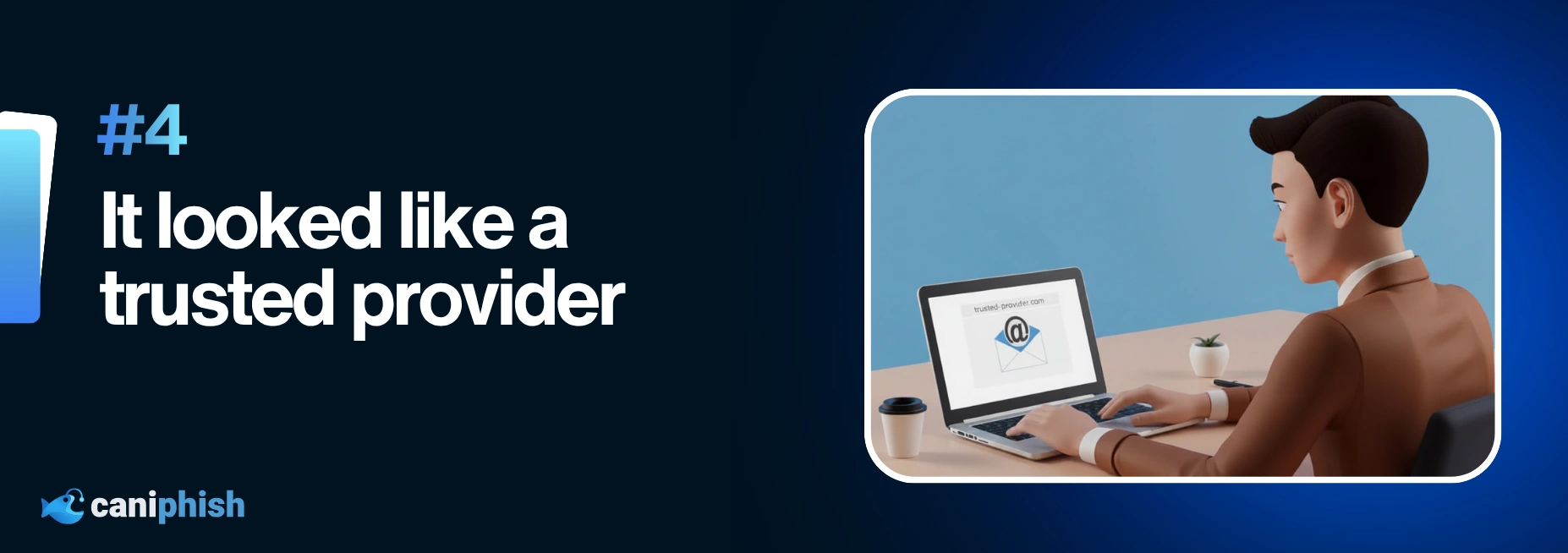
If an email looks like it came from a service you use all the time, are you automatically going to be suspicious? Probably not.
That’s why phishing emails so often imitate familiar brands like Google, Microsoft, Dropbox, payroll platforms, and delivery providers. If the logo is spot on and the message is close enough to the real thing, employees will treat it like a standard procedure.
That doesn’t make them reckless. That’s a natural response.
Employees don’t have time to do a digital investigation every time a business-as-usual email lands in their inbox. They rely on familiar names. Familiar requests. Familiar layout.
And that sense of familiarity is exactly what attackers are relying on. They aren’t just borrowing logos. They are borrowing trust that someone else has already built.
5. It blended in with a normal workday
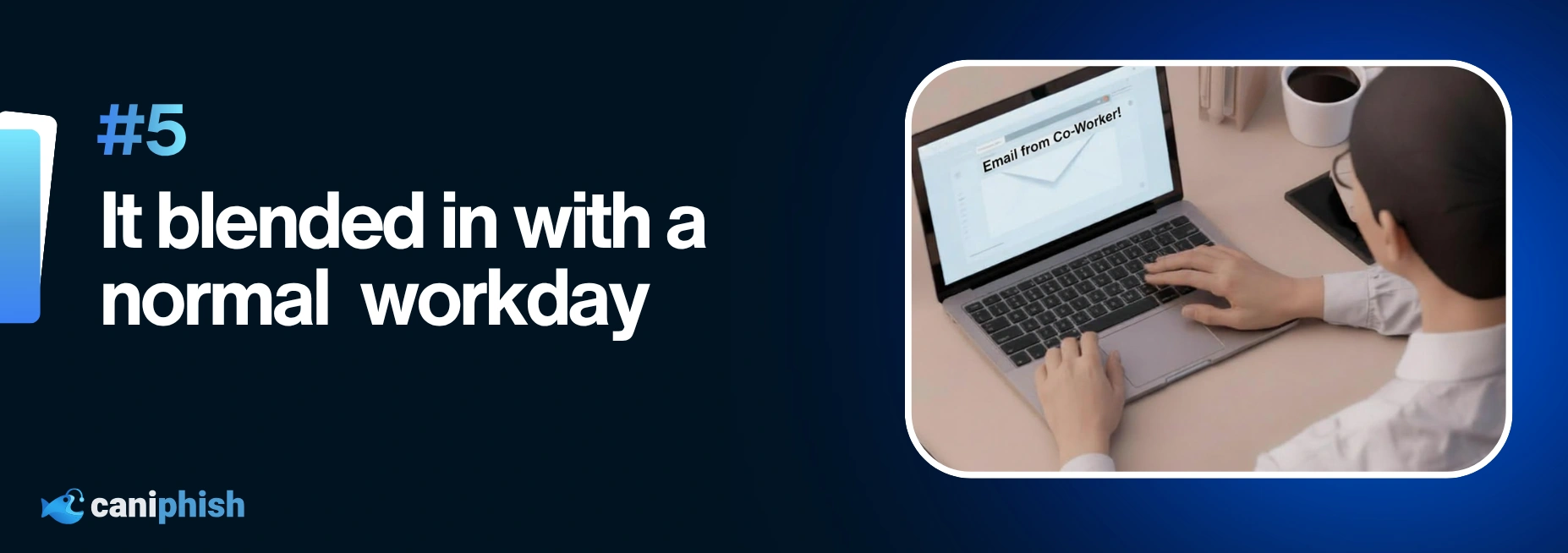
The best phishing emails are often the most boring ones.
If an email looks like a usual approval request, invoice, sign-in prompt, or internal update, it can slide quietly in the workday without raising an eyebrow. So it doesn’t have to look exciting, it just has to look routine.
Routine is where people feel most comfortable, so they move fast.
If an employee is used to processing dozens of messages, links, invoices, prompts, and notifications, they’re not going to treat everyone as suspicious. They’re doing what work trained them to do, which is to keep things flowing by working quickly and efficiently.
In a busy environment, the phish succeeds by becoming one more ordinary task in an already crowded queue.
6. They were running on autopilot
Imagine if everyone had to stop and deeply analyze every single click, login, file, and notification that popped up in their day? Very little would be achieved.
Employees perform familiar tasks instinctively, especially when they are busy, distracted, or trying to keep up. That autopilot keeps work moving, but it can also allow warning signs to pass unnoticed.
When someone works from habit rather than active scrutiny, they are more likely to react first and think later. That is where the danger lies. Not always in carelessness, but in the split second where routine takes over before caution has a chance to speak up.
The attack doesn’t always work because it’s clever. Sometimes it works because the target is mentally cruising, and the phish swims by unnoticed.
7. It looked like it came from someone important
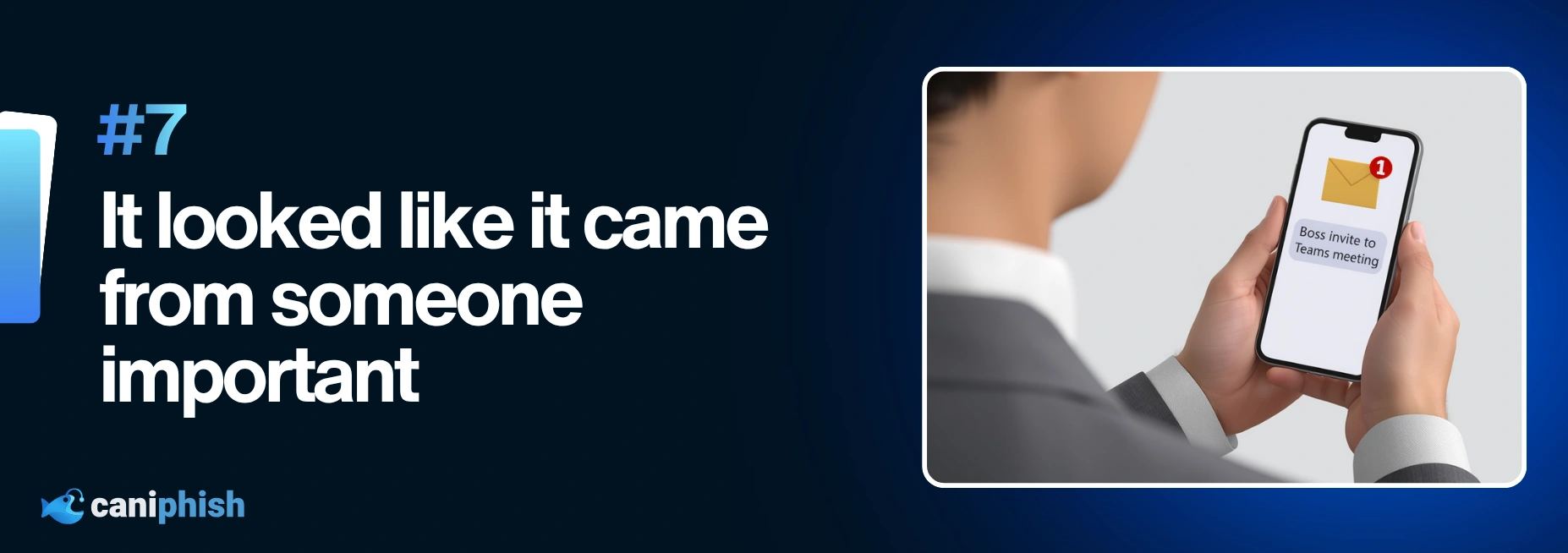
Think about how differently you react when a message looks like it came from your boss, IT team, or a service you rely on.
A message that appears to come from someone important or familiar naturally carries more weight than a random email out of the blue. People are more likely to respond quickly when the sender seems credible, relevant, or connected to something they use every day.
Sometimes the authority is obvious, like a fake email from a manager or a government agency. Sometimes it is more subtle, like a message from a platform the employee depends on to do their job. Either way, the result is the same. Once authority enters the picture, people tend to question less and comply faster. That is how workplace communication often works.
8. The phish only required one small mistake
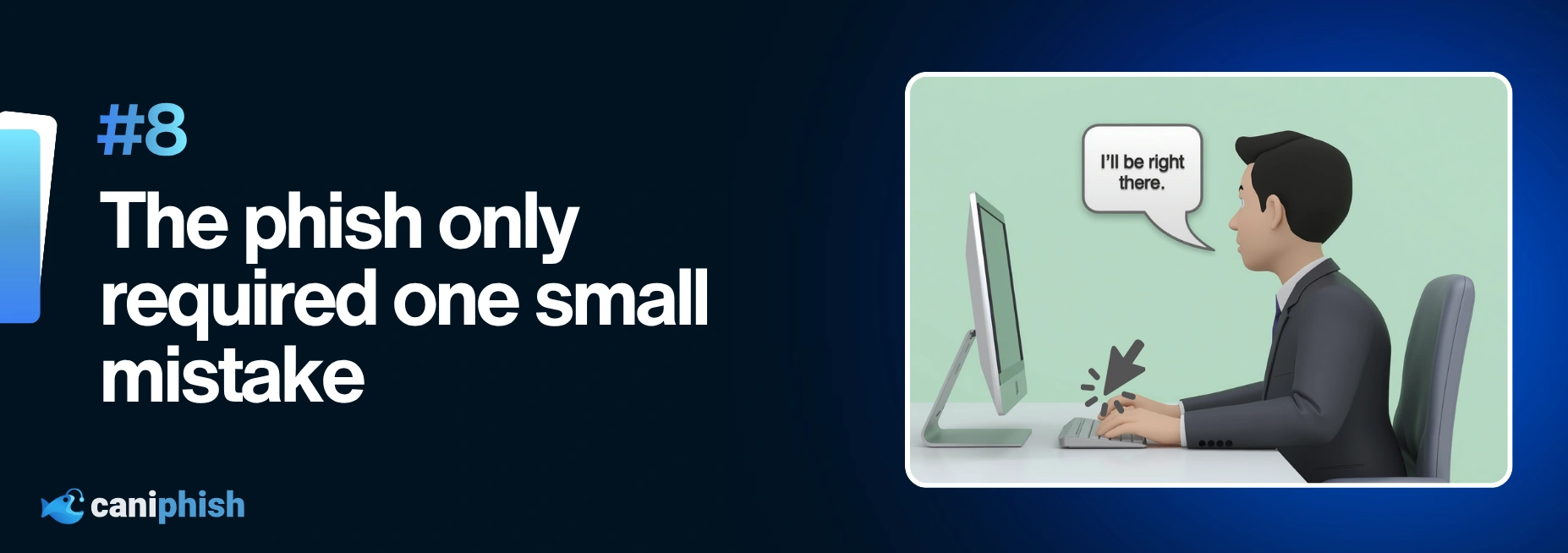
Imagine how many small decisions people make in a workday. Now imagine an attacker only needs one of them.
A successful phishing attack doesn’t always require a giant breakdown in judgment. All it needs is one tiny click, one code, one login, or one rushed response. That’s it.
People often imagine phishing victims making some huge, movie-worthy mistake, but real incidents are usually much less dramatic. The employee is having a bad day. They’re stressed. Not paying attention. The email looks close enough. The request seems routine. They make one tiny wrong decision, and the attacker has what they want.
That’s why phishing is so frustrating. The gap between “it’s all good” and “well, this is going to be a very unpleasant meeting” can be uncomfortably small.
9. Overconfidence can quietly lower their guard
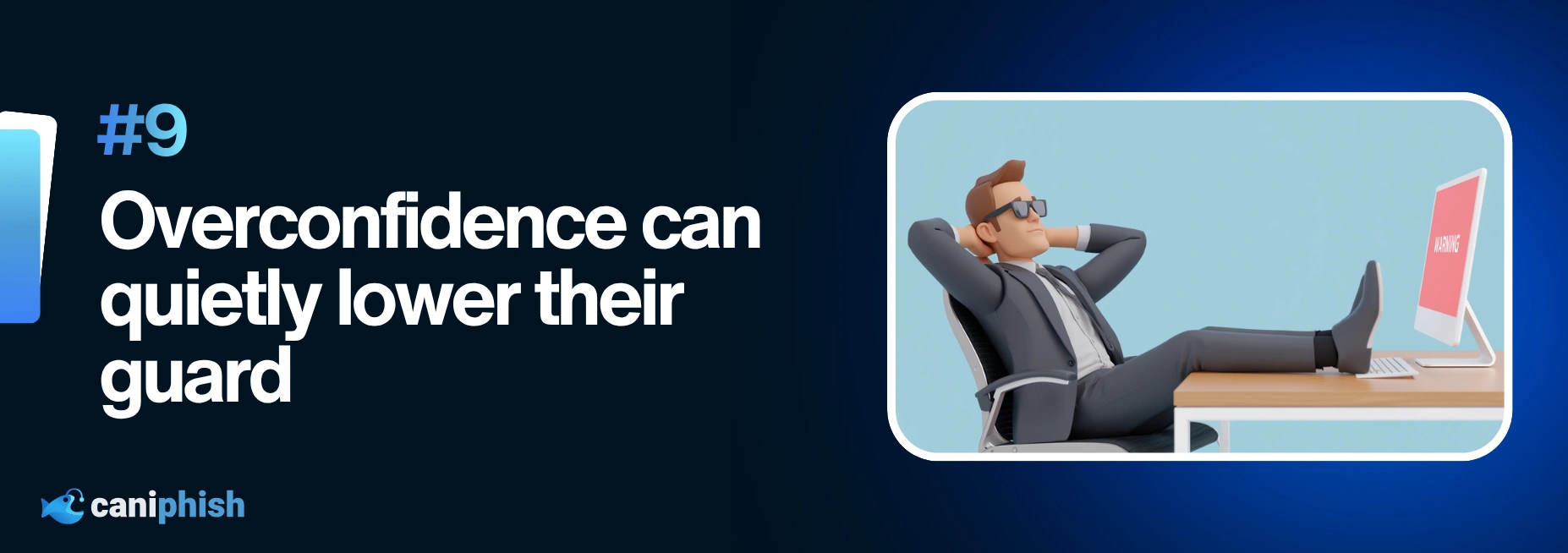
Think you are too smart to fall for a phishing email? That confidence can be your undoing.
If someone believes that they would never fall for a phishing email, they may stop looking as carefully as they should. They trust their instincts. They assume they would spot something suspicious and continue with their day. Most of the time, that confidence feels justified. Until a convincing lure shows up and slips straight past it.
Attackers aren’t choosy. They don’t just go after uninformed people. They go after smart, confident people, too.
Because confidence can turn into shortcut thinking.
“I know what I’m doing.”
“This looks fine.”
“I’d spot a scam a mile away.”
Famous last words in cybersecurity.
Knowing the risks is a great start, and it absolutely helps. But assuming you are too smart to get caught is exactly the kind of mindset attackers love.
10. Modern phish are much harder to spot
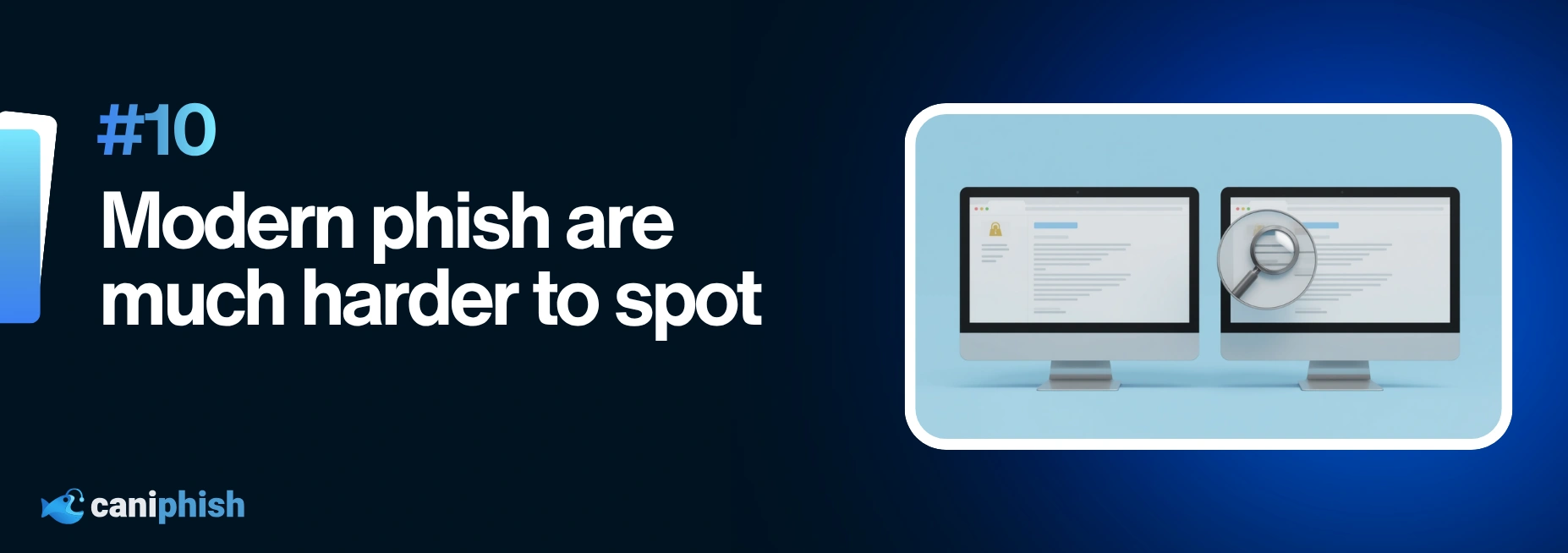
Ever looked at a phishing email and thought, annoyingly, “That is actually pretty convincing”? I know I have.
Phishing emails are more polished and harder to spot these days.
They look clean, sound natural, and ask for things that make sense in the moment. Some are timed to match real events. Some imitate genuine providers almost perfectly. Some are written well enough that they look more professional than half the newsletters cluttering your inbox.
Better tools have made phishing emails easier to create and far more convincing. Attackers can now produce polished writing, professional branding, and realistic-looking messages with less time and effort.
That is why spotting phishing is no longer as simple as looking for obvious mistakes.
Yes, bad spelling and weird phrasing still exist. But today's phishing looks clean, familiar, and completely plausible at first glance. So when people ask why smart employees still fall for it, the answer is not always sophisticated. Sometimes it’s simply that the phish was convincing, and the attacker knew exactly how to make it feel real.
Real-world example: Troy Hunt and Have I Been Pwned
If you want a real-world example of how phishing can hit all the right pressure points at once, Troy Hunt is a pretty good one.
This was not some cartoonishly bad scam with broken grammar and a dodgy link from planet nonsense. It was a polished phish that landed at exactly the wrong time.
Hunt had just been traveling and was tired after a long flight. The email appeared to come from Mailchimp, a provider he used, so it did not seem random or out of place. It looked routine. It looked legitimate. And to make things worse, the message created pressure by suggesting there was an issue that needed immediate attention.
When those details line up, the email stops feeling suspicious and starts feeling like admin. Boring, normal, slightly annoying admin. Exactly the kind of thing people deal with quickly so they can move on.
And the outcome was not minor. The phish led to unauthorized access to his Mailchimp account, and subscriber data was exposed.
That is why this example matters. It brings together the exact reasons phishing works against smart people so often in real life. Not because the target is clueless, but because the attack is designed to feel just normal, urgent, and believable enough to sneak through.
Wrapping up
So why do smart employees still fall for phishing attacks?
Because phishing isn’t about intelligence. It’s about living life and all the chaos that comes with it. It’s about timing, pressure, trust, context, habit, and catching someone in a very human moment. As the Troy Hunt example shows, even people who know this stuff like the back of their hand can still get caught out when the right triggers stack up at the wrong time.
That is the point.
Getting phished doesn’t automatically mean someone was careless, clueless, or not taking security seriously. Sometimes it was just timed perfectly. Smart people are not immune. They are human, like everyone else.

The Top 13 AI Documentaries In 2026
Uncover the dark side of artificial intelligence, minus the Hollywood lasers.
Check out our top picks
An Operations Analyst on a mission to make the internet safer by helping people stay a step ahead of cyber threats.