The Top Open-Source Phishing Simulation Tools In 2026

Are you on the hunt for an open-source phishing simulation tool that helps you test whether your employees can spot a phishing email before an attacker does?
Good call.
In this blog, we’re breaking down the top open-source phishing simulation tools available in 2026, including what they do well, where they fall short, and which type of team they suit best.
Not every open-source tool does the same job, so it pays to know what each one is actually built for.
What Are Open-Source Phishing Simulation Tools?
An open-source phishing simulation tool is software with publicly available source code that helps organizations run safe, controlled phishing-style tests without paying for a commercial software license. Because the tool is open-source, teams can usually inspect it, self-host it, customize it, and adapt it to suit their own environment.
A phishing simulation is a safe way to test how employees react to realistic phishing-style emails.
The point is not to catch people out. It is to help them notice risky moments, understand what they missed, and feel more confident reporting suspicious emails before a real attacker gets involved.
For example, a company might send a fake email about unusual account activity. If someone clicks the link, they are taken to a safe training page instead of a malicious website. That page can show them the warning signs they missed and explain what to look for next time. Depending on the campaign, they may also be given follow-up training.
In short, these tools help teams run their own phishing simulations, review the results, and improve awareness without relying on a paid commercial platform.
Open-Source Phishing Simulation Tools
So, let’s break down what each open-source phishing tool does, where it fits, and how it compares.
We’ll cover Gophish, King Phisher, Evilginx2, SET, CanIBeSpoofed, SPF-Bypass, and Phishious.
Gophish
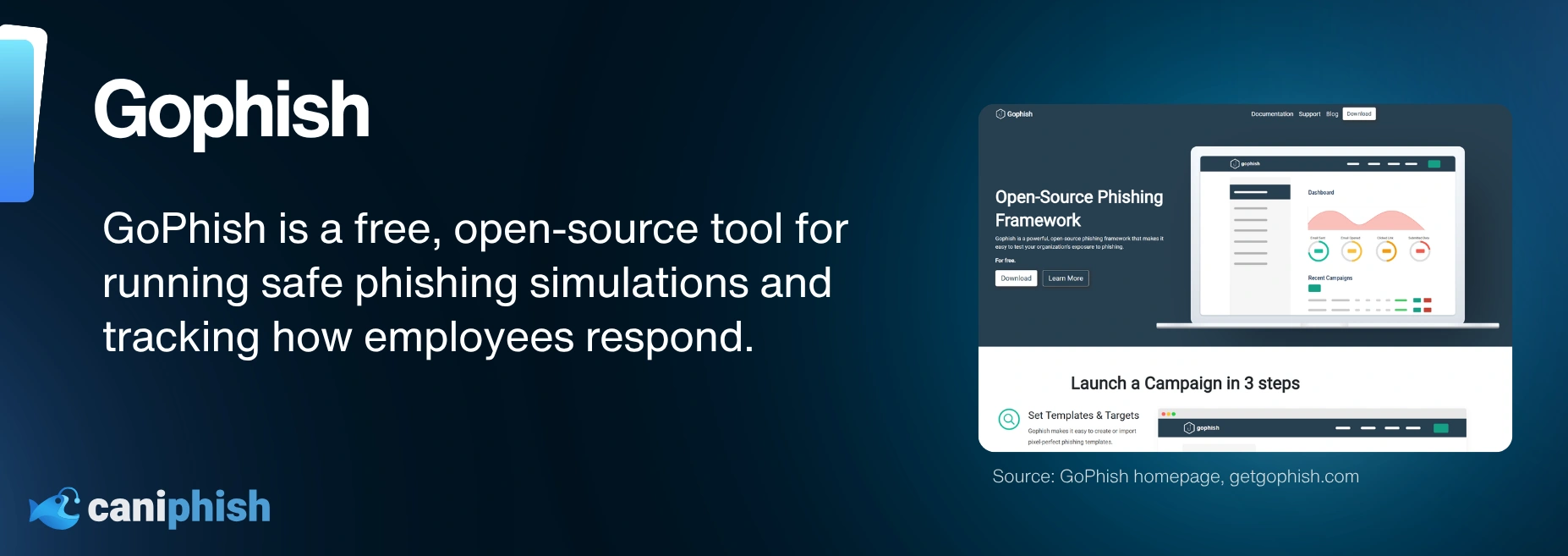
Gophish is one of the first names people mention when this topic comes up. It is best known as an open-source phishing simulation framework.
Why Gophish Is Useful
Gophish is a strong option for organizations that have the technical skills to manage their own phishing simulation setup.
It helps teams run basic phishing awareness tests, monitor click rates, and understand how employees respond to different phishing scenarios.
Small organizations, consultants, and internal security teams may find Gophish useful because it gives them a hands-on way to run phishing simulations without committing to a paid platform straight away.
Where Gophish Falls Short
Gophish is useful, but it is not a full security awareness platform on its own.
Teams still need to manage the setup, hosting, templates, landing pages, email delivery, reporting, and training follow-up. If you have the time and technical skill, that may be fine. If not, you may save money on software and spend it all on troubleshooting, time, and mild regret.
Although Gophish gives you the tools, you still need to know how to use them.
King Phisher
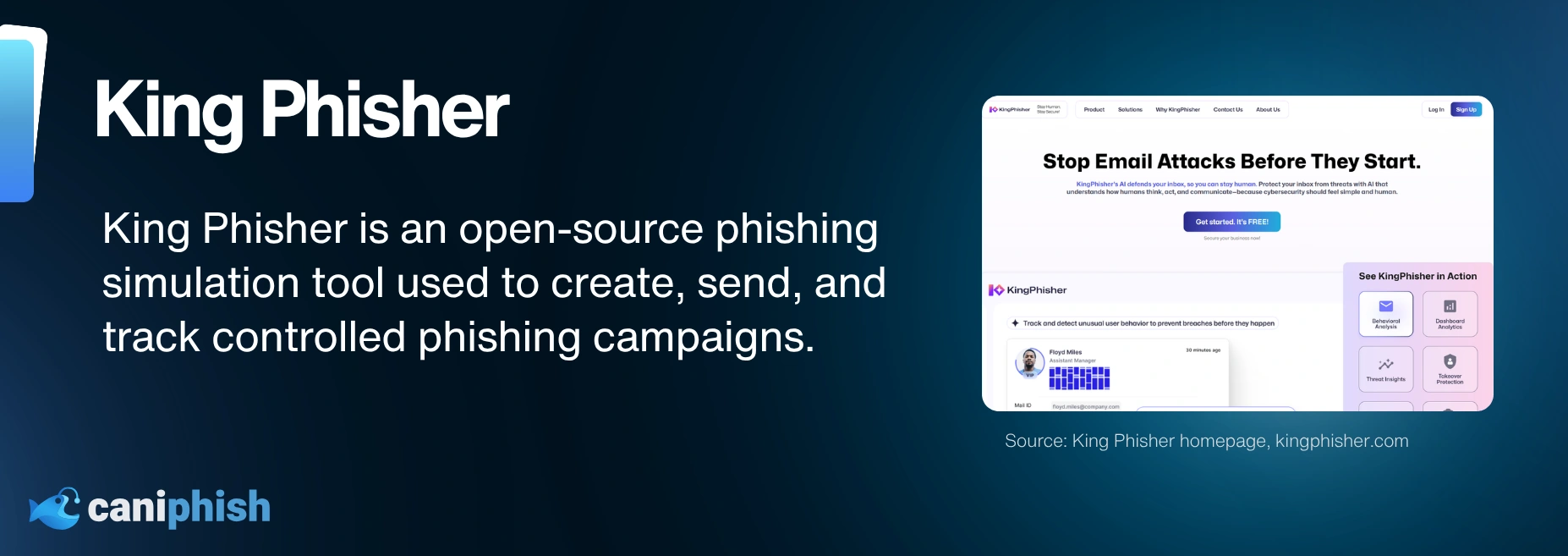
King Phisher is an open-source phishing campaign toolkit used by security professionals for phishing simulation and awareness testing.
Why King Phisher Is Useful
King Phisher’s main strength is that it gives technical users control over their phishing simulation setup.
It can be useful for teams that want to build and manage their own phishing campaigns, control target lists, and track engagement, especially if they are comfortable working with open-source tools and handling more of the configuration themselves.
Where King Phisher Falls Short
King Phisher is not as beginner-friendly as some newer tools. It requires technical confidence to set up, secure it, and keep it running properly.
King Phisher is useful, but it’s better suited to professionals who are comfortable with older open-source tooling rather than teams looking for a ready-to-go phishing simulation platform.
Evilginx2
https://github.com/kgretzky/evilginx2
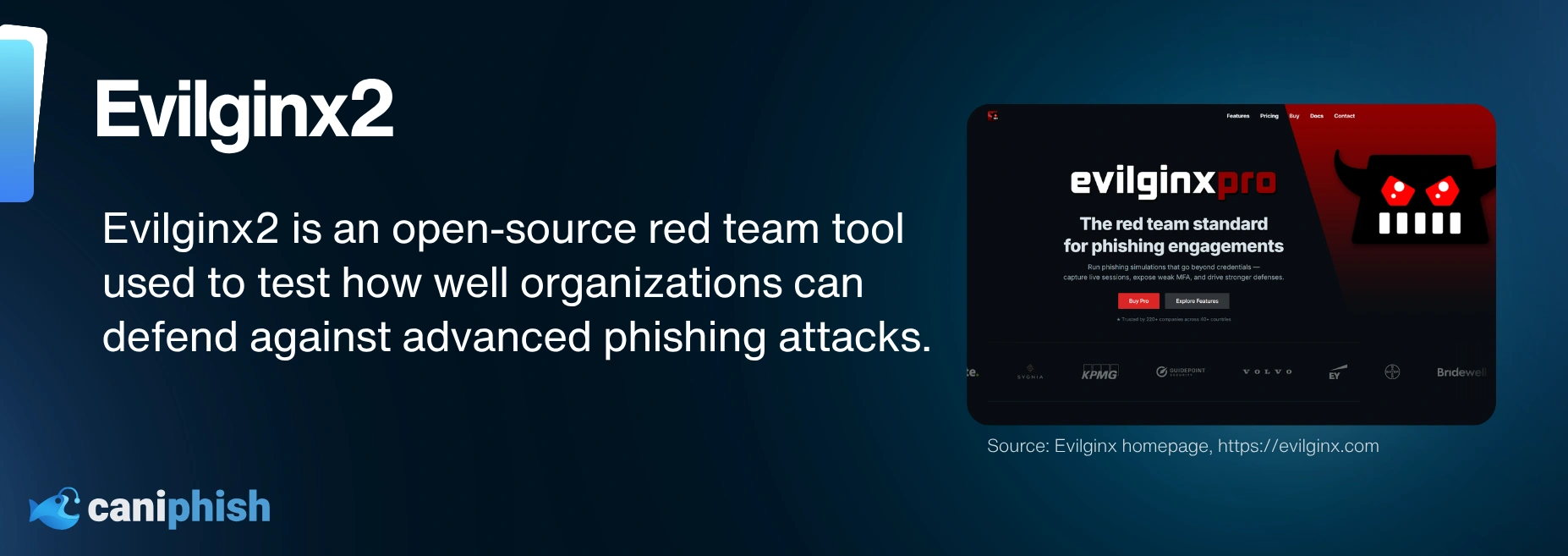
Evilginx2 is an open-source tool used by penetration testers and red teamers to simulate advanced phishing attacks. It can help show how adversary-in-the-middle phishing works, including how attackers may capture session tokens and bypass some MFA defenses.
Why Evilginx2 Is Useful
It helps security teams understand how session-based attacks work in a controlled environment, which is important because attackers are not always just trying to steal passwords. Sometimes they try to steal the active session after login.
Where Evilginx2 Falls Short
Evilginx2 is not designed for standard employee phishing awareness campaigns. It is technical and sensitive and should only be used in authorized red-team or penetration-testing environments.
If your goal is to run safe phishing simulations, track clicks, and provide follow-up training, Evilginx2 is not the right fit. This one is less “training campaign” and more “handle with care.”
Social-Engineer Toolkit
https://github.com/trustedsec/social-engineer-toolkit
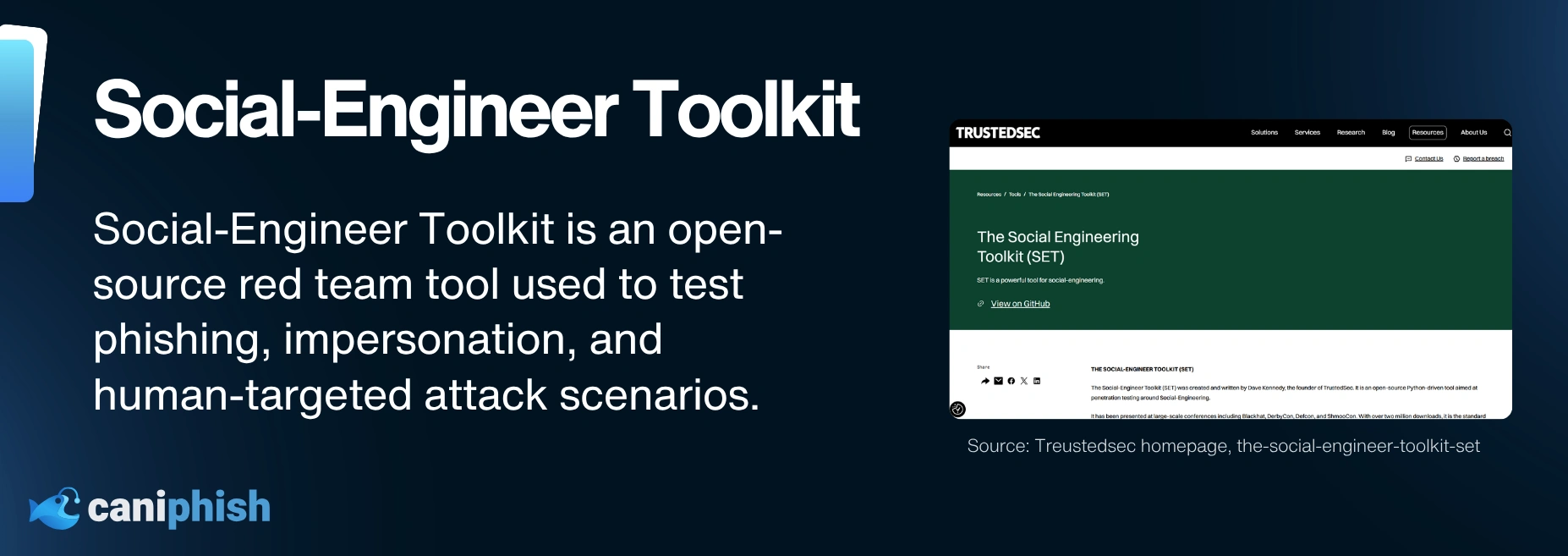
The Social-Engineer Toolkit, also known as SET, is an open-source framework for social engineering and penetration testing. It’s designed for advanced authorized security assessment.
Why SET Is Useful
SET is useful because it helps security professionals test broader social engineering scenarios, not just simple phishing emails.
It can give teams a deeper view of how a social engineering test might play out, including how people respond to different prompts, pages, and attack paths.
In other words, it goes beyond the basic “yep, someone clicked it” result.
Where SET Falls Short
SET is more technical than a standard phishing simulation tool. It is designed to simulate more advanced social engineering attacks and demonstrate how weak processes or poor security habits can be abused.
That makes it powerful, but also more complex.
If the goal is to send basic phishing simulations to staff and track who clicked, Gophish is usually a better starting point. SET is better suited to red teams, penetration testers, and security professionals running controlled assessments.
CanIBeSpoofed
https://github.com/CanIPhish/CanIBeSpoofed
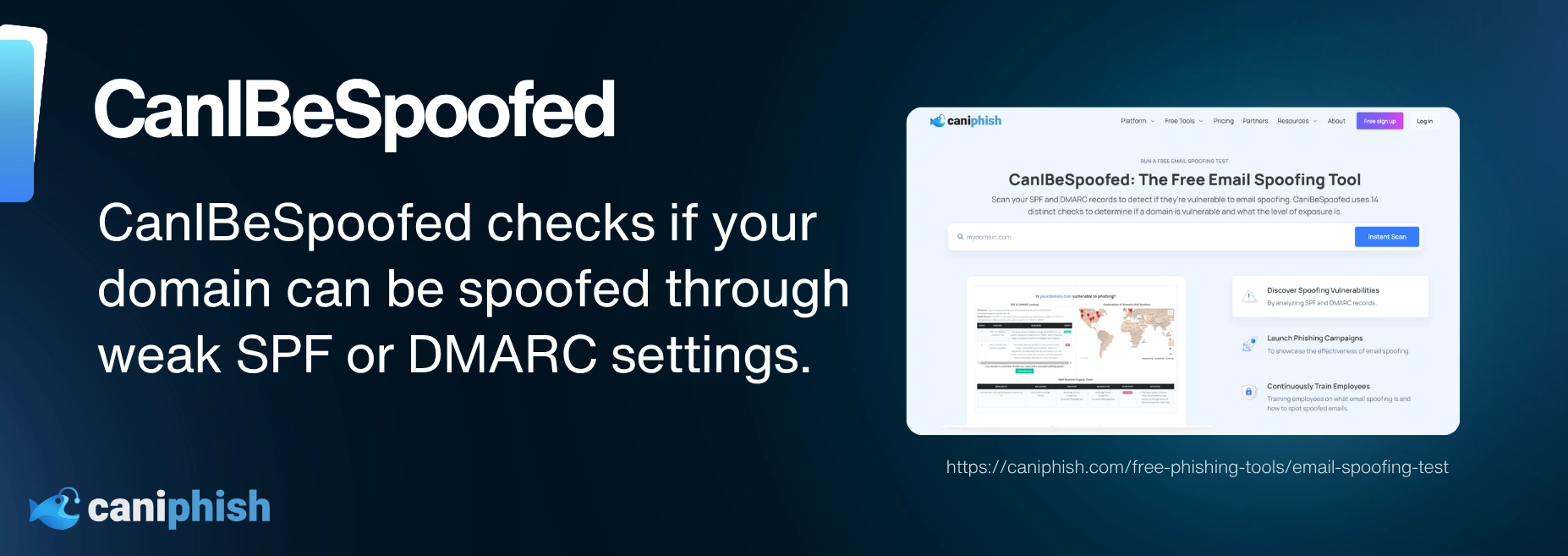
CanIBeSpoofed is a CanIPhish tool available on GitHub that helps organizations discover domain-spoofing risk by scanning for email supply chain, SPF, and DMARC weaknesses.
It helps answer an important question.
Could someone spoof your domain and send out phishing emails to look like it came from you?
Why CanIBeSpoofed Is Useful
Phishing attacks are far more convincing when they appear to come from a trusted brand, supplier, executive, or internal domain.
CanIBeSpoofed gives security teams a clearer view of weaknesses that may increase spoofing risk. Its value sits in the technical readiness layer. It helps teams understand whether their domain controls are strong enough, which is a huge slice of the phishing defense pie.
Where CanIBeSpoofed Falls Short
CanIBeSpoofed is not a phishing simulation platform, so it cannot replace a managed phishing awareness tool. It is designed to be used as a beneficial tool alongside phishing campaigns, awareness training, and proper email controls.
SPF-Bypass
https://github.com/CanIPhish/spf-bypass
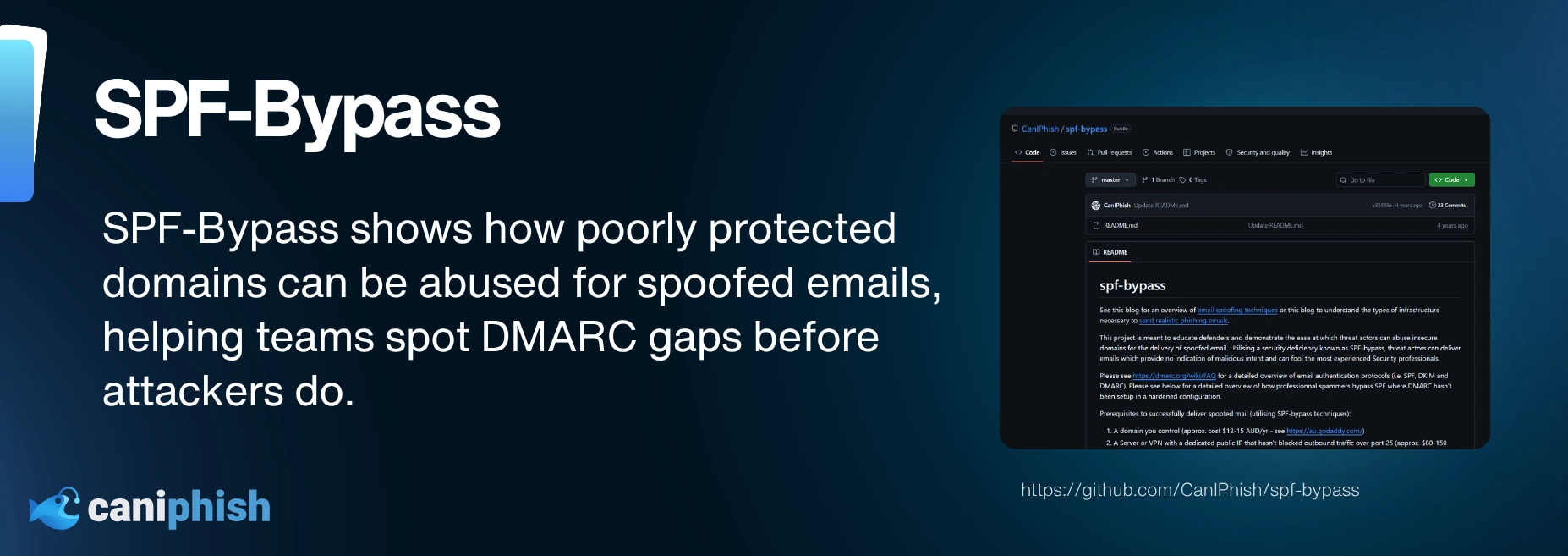
SPF-Bypass is another GitHub tool from CanIPhish that helps security teams understand how domains without proper DMARC protection can be misused.
Why SPF-Bypass Is Useful
SPF-Bypass is a technical testing tool for teams that want to better understand email authentication gaps without relying on assumptions.
Some domains may still be vulnerable to spoofing if SPF, DKIM, and DMARC are missing, misconfigured, or not enforced properly. SPF-Bypass helps expose those weaknesses so teams can identify risky configurations, validate their defenses, and improve protection.
Where SPF-Bypass Falls Short
SPF-Bypass is a technical testing tool. It’s not a security awareness platform or a phishing simulation tool. It’s designed for users who want to see if spoofed emails can be blocked, quarantined, or delivered.
Phishious
https://github.com/CanIPhish/Phishious
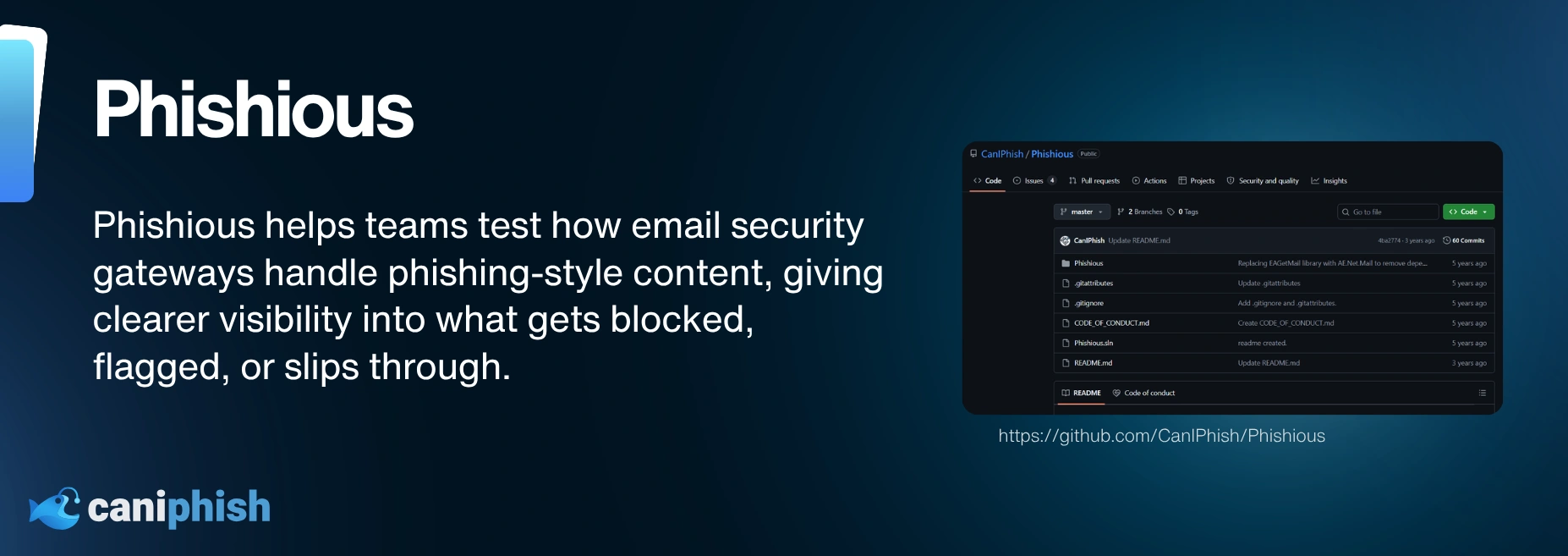
Phishious is also part of CanIPhish’s free GitHub toolkit. Phishious tests whether a Secure Email Gateway can catch phishing-style emails before they reach the inbox.
Why Phishious Is Useful
Phishious is useful because it helps strengthen your security defenses without relying solely on employees. Employees need to know how to spot a suspicious email, but they shouldn’t have to act as the final line of defense. Technical controls and human behavior should work together.
Where Phishious Falls Short
Phishious tests email gateway defenses, not employee behavior. It helps show what your technical controls catch before landing in your inbox. It doesn’t replace phishing simulations or awareness training.
Which Tool Should You Choose?
The right tool depends on what you actually need it to do.
Phishing Simulation
Build and run organization-wide phishing awareness campaigns.
Red Team & Pen Testing
Simulate adversarial attacks, including MFA bypass and broader social engineering.
Email & Domain Recon
Identify spoofing risks and test whether your email gateway defences hold up.
| Tool | Type | Best For |
|---|---|---|
| Gophish | Phishing Sim | Org-wide phishing campaigns, smaller teams |
| King Phisher | Phishing Sim | Technical users wanting full control |
| Evilginx2 | Red Team | Red teams, MFA bypass testing |
| Social-Engineer Toolkit (SET) | Red Team | Broader social engineering assessments |
| CanIBeSpoofed | Recon | Domain spoofing risk checks |
| SPF-Bypass | Recon | Email authentication gap testing |
| Phishious | Recon | Secure email gateway testing |
Final Verdict
So, which open-source phishing simulation tool should you choose?
Depends on what you’re after.
Each tool serves its own purpose. Some help run phishing simulations, some support red team exercises, and others test whether your technical defenses are ready for real-world phishing attempts.
Open-source tools can absolutely help, but only when they match the job. Pick the wrong tool, and “open-source” can quickly become a very expensive use of your team’s time.
Frequently Asked Questions
What Is a Phishing Simulation Tool?
A phishing simulation tool lets you send safe, controlled phishing-style emails to your own employees to see how they respond. The point isn’t to catch people out. It’s to help them recognize risky emails, understand what they missed, and feel more confident reporting suspicious messages before a real attacker shows up.
Is Gophish Free?
Yes. Gophish is a free, open-source phishing simulation framework, so the software itself costs nothing. Just remember you still need to host it, configure it, and manage templates, reporting, and follow-up training yourself. The tool is free. The time and effort to run it well is not.
Are Open-Source Phishing Tools Safe to Use?
They can be, as long as you use them responsibly and only against systems and people you are authorized to test. Some tools, like Evilginx2 and the Social-Engineer Toolkit, are powerful enough that they should only be used in controlled red-team or penetration-testing environments. Stick to authorized testing and follow your organization’s policies.
Are Free Phishing Simulation Tools Worth It?
Free tools are useful, but as they say, you get what you pay for. They may save money upfront, but they can come with a different kind of cost in the long term. Setup, configuration, maintenance, management, testing, and troubleshooting all take time. So free? Yes. Effort-free? Not quite.
What’s the Difference Between Open-Source and Paid Phishing Simulation Tools?
Open-source tools can be a great option for organizations with a dedicated team to manage setup, launch campaigns, and review results. They work best when the team has the time and technical skills to run everything properly.
Paid phishing simulation tools are usually the more convenient option. You are not just paying for the software itself. You are paying for the templates, training content, reporting, automation, support, and all the behind-the-scenes work that makes campaigns easier to manage. Basically, less moving parts and manual work.
Should I Use a Free or Paid Phishing Simulation Tool?
So, the real difference is not just price. It is how much time, skill, and internal effort your team is prepared to spend. If you have a technical team with time to manage everything, a free or open-source tool can work well. If you would rather focus on results than maintenance, a paid platform is usually the easier path.

The Top 13 AI Documentaries In 2026
Uncover the dark side of artificial intelligence, minus the Hollywood lasers.
Check out our top picks
An Operations Analyst on a mission to make the internet safer by helping people stay a step ahead of cyber threats.