The 10 Largest Cybersecurity Companies In 2026

Are you looking for the biggest cybersecurity companies making waves in 2026?
In this blog, we're ranking the 10 largest cybersecurity companies based on public market value, acquisition value, and the strongest publicly available valuation estimates. We're focusing on companies that are mainly known for cybersecurity, including recently acquired names that still carry serious weight in the market.
These are the companies shaping how the world protects its systems, data, and infrastructure.
Let's dive in.
#1. Palo Alto Networks
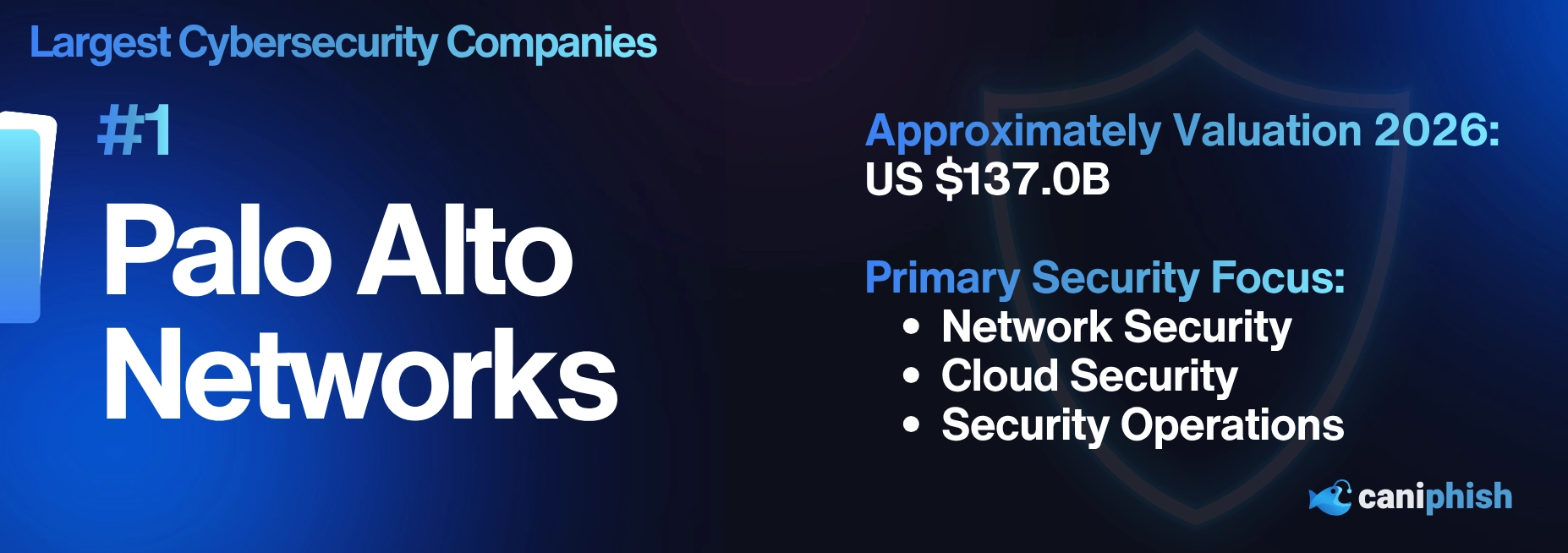
Coming in at number 1 as the largest cybersecurity company is Palo Alto Networks.
Palo is still sitting at the head of the cybersecurity table, and for good reason. It started as a firewall company, but has grown well past that. It's evolved into a full-blown security empire. They cover everything from cloud and network protection to SOC automation, AI-driven threat detection, and now identity security. They’ve built the closest thing the industry has to a true all-in-one platform.
One of its boldest moves this year was the acquisition of CyberArk, adding privileged access management and identity muscle to an already stacked lineup.
With a market valuation above $135 billion and next-gen ARR of over $6 billion, it's not just leading the pack... it's widening the gap. Prisma Browser has also quickly become part of Palo Alto’s broader push into securing users, data, and browser-based work.
This isn’t a company selling security tools. Palo Alto sells control. And in 2026, it’s not just leading the cybersecurity market, it’s helping define where it goes next. Everyone else is playing catch-up.
#2. CrowdStrike
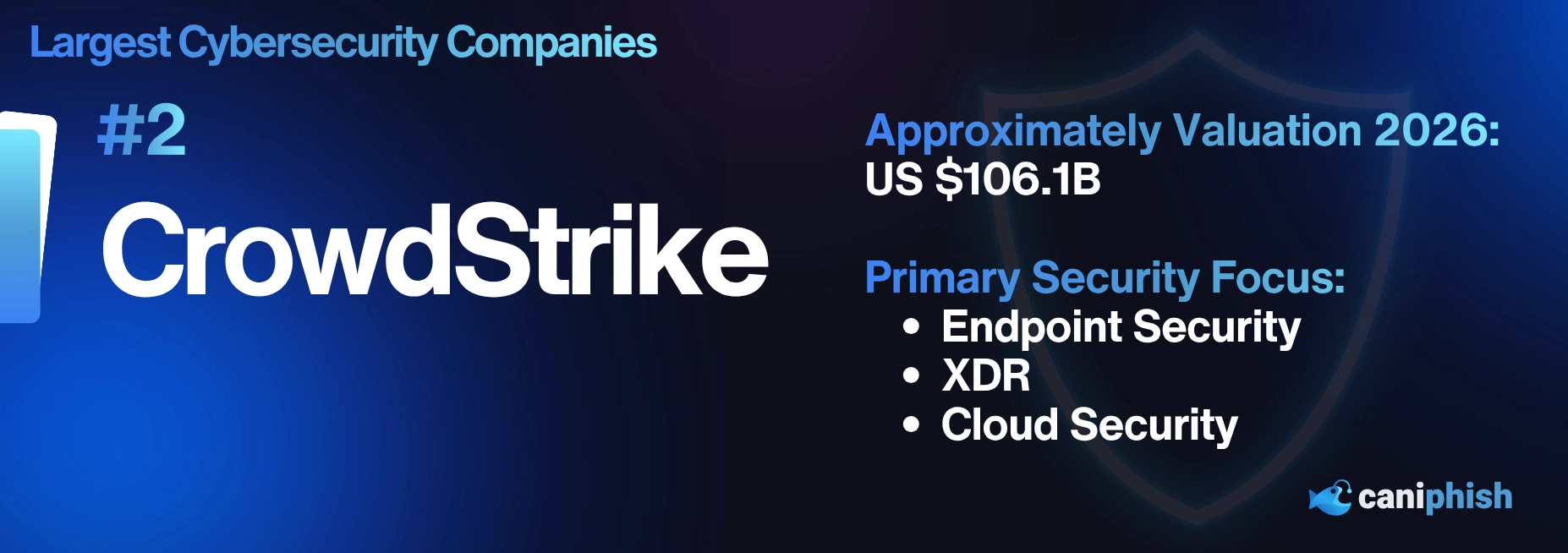
Holding strong in second place is CrowdStrike, the company that made endpoint cool and profitable. While others focused on cloud features, CrowdStrike built its platform in the cloud from the get-go.
The result? Falcon. A sleek, hyper-scalable threat hunting engine that now monitors trillions of events per day across endpoints, workloads, and identities in real-time.
CrowdStrike is worth around the $106 billion mark, with ARR reaching $5.25 billion. That alone tells you how much weight it carries in the market.
What keeps them climbing? AI-fueled threat detection, rapid response, and a single lightweight agent that security teams don't hate deploying.
It's not just endpoint anymore. CrowdStrike has expanded further into identity, cloud workload protection, and even SIEM replacement territory.
In a world of bloated, stitched-together security stacks, CrowdStrike's biggest flex is simplicity at scale.
#3. Fortinet
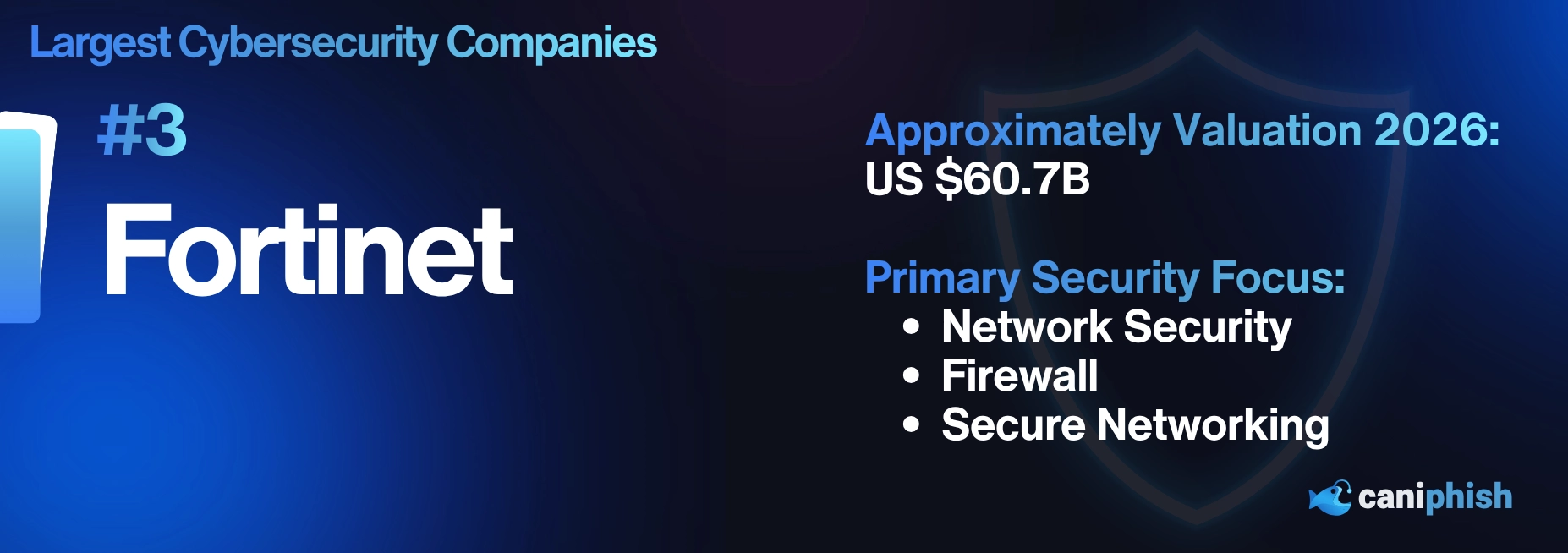
Fortinet isn't the cool kid on the cloud block or the latest AI darling. But it is everywhere.
Established in 2000, Fortinet has been in the game longer than its competitors have existed. And over that time, it's quietly built one of the largest security ecosystems.
Their bread and butter is the FortiGate firewall, which still dominates the market in 2026. But Fortinet isn't just a firewall company anymore. Their security fabric now spans endpoint protection, SD-WAN, Zero Trust, OT security, and even AI-powered SOC tools.
What sets them apart from the others? They built their own ASIC chips, so their hardware runs faster, more cost-effectively, and with greater efficiency than the competition.
In 2026, Fortinet was valued at well over $60 billion, with full year 2025 revenue of $6.8 billion and one of the largest installed bases of security appliances globally.
You'll find Fortinet gear in hospitals, airports, governments, data centers and remote outposts with bad Wi-Fi and plenty of cyber risk. When you're securing mission-critical infrastructure across 100+ countries, “works” matters more than “wow.”
#4. Wiz
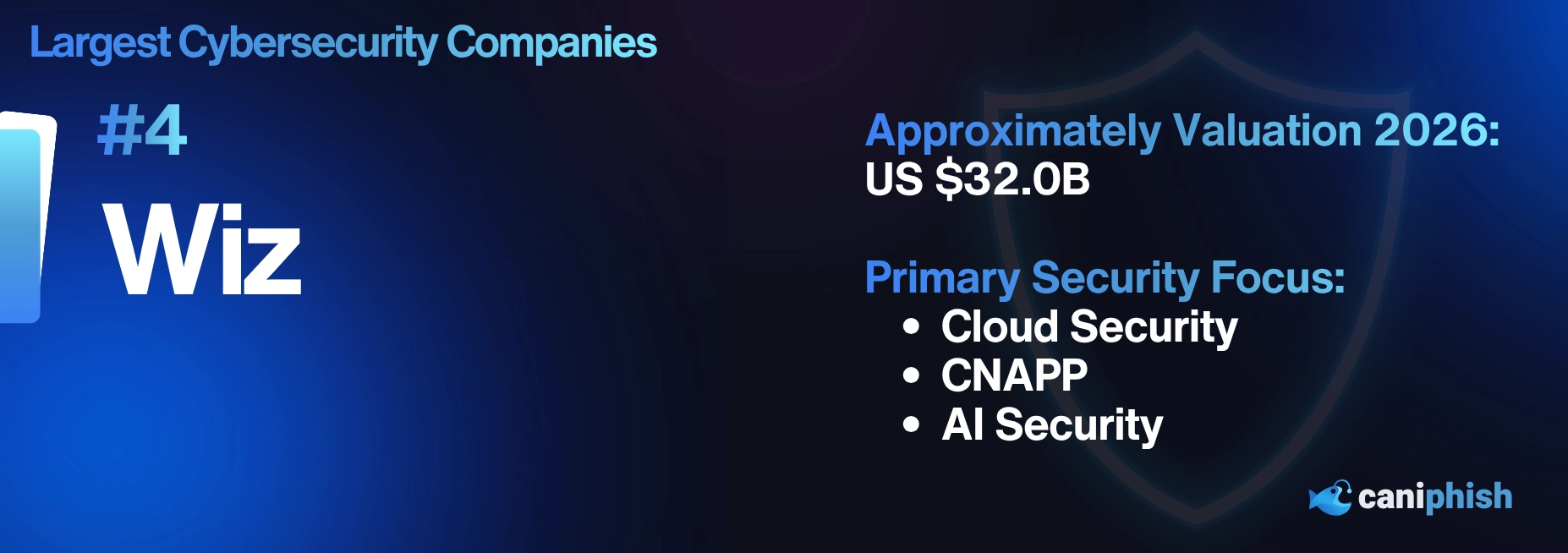
Wiz didn't need an IPO to join the big leagues. It just let Google write a $32 billion check and call it a day.
Founded in 2020, Wiz became one of the fastest-growing cybersecurity companies in history by doing what most cloud security vendors couldn’t. It keeps things simple.
Its clean, agentless platform scans cloud infrastructure across AWS, Azure, and GCP for misconfigs, vulnerabilities, malware, secrets, and identity risks. It provides security teams with a single graph of their entire cloud environment, enabling them to identify toxic combinations before attackers do. Wiz's graph-based approach is one of its biggest selling points because it's all about clarity, speed, and simplicity. Security teams love it because it makes sense, which is rare in cloud security.
By 2025, Wiz had grown to more than $500 million in annual recurring revenue and was working with about half of the Fortune 100, growing faster than most vendors can staff up.
Now with Google behind it, the platform has enterprise reach, deep integrations, and a seat at the hyperscaler table. Wiz didn't climb the ladder, it jetpacked to the top. There's a reason Google skipped the IPO line and paid the big bucks.
#5. Zscaler
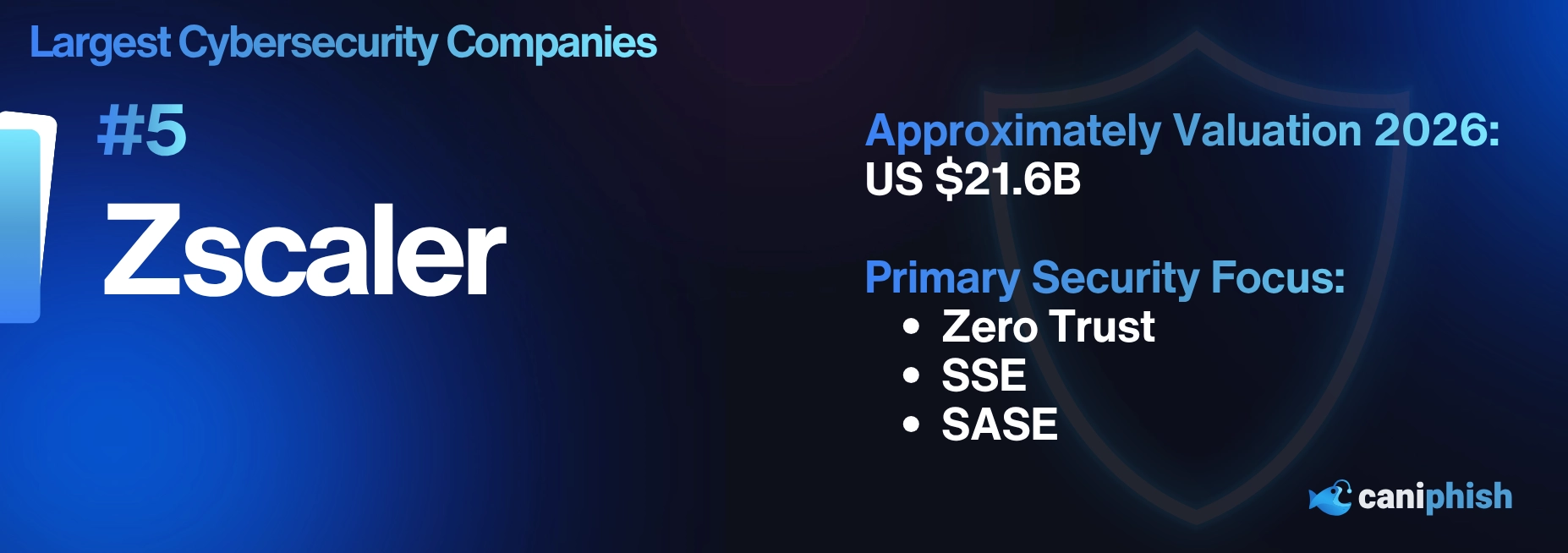
Zscaler basically wrote the playbook for cloud-based Zero Trust. It was preaching “no network, no perimeter” while others were still duct-taping firewalls to VPNs. Their platform was built from the ground up for secure access in a cloud-first world. No appliances, no retrofits, no excuses.
Founded in 2007, Zscaler didn't pivot to Zero Trust. It's been living there rent-free for years. The company offers two flagship products: Zscaler Internet Access (ZIA) and Zscaler Private Access (ZPA). One secures users connecting to the internet, the other secures internal access to apps. Together, they replace clunky VPNs and overlooked firewalls with something that works at enterprise scale.
Currently, Zscaler is securing thousands of global customers and bringing in well over $2 billion in revenue. Everyone from major enterprises to federal agencies is using it to lock down remote workforces, cloud environments, and SaaS apps.
Zscaler is the backbone of modern enterprise security. Quietly critical. Aggressively efficient. And the reason half the world's VPNs are now collecting dust.
#6. Check Point
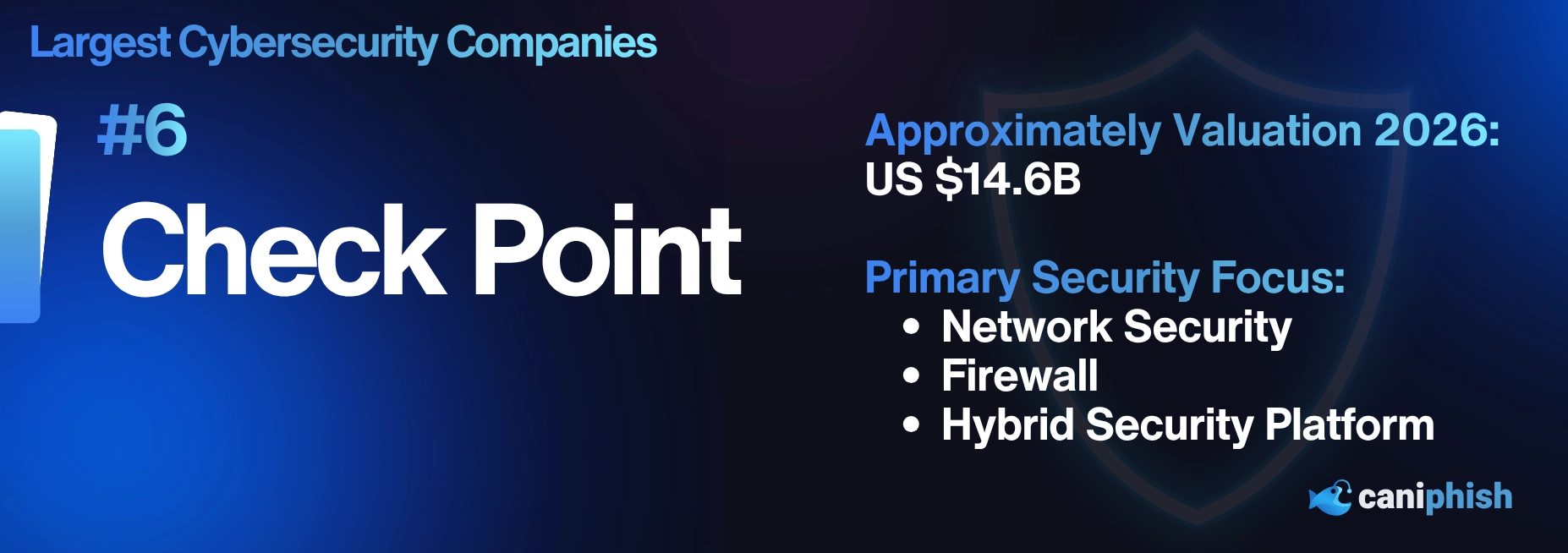
Check Point is the OG of cybersecurity.
This is the company that literally invented the modern firewall back in the 90s and set the standard for perimeter defense before it was even called "perimeter defense."
Founded in 1993, it's one of the oldest players still standing and thriving in a market that churns through vendors.
Today, it continues to defend some of the biggest names in finance, government, healthcare, and telecom, backed by a market cap around $14.6 billion and a loyal customer base of over 100,000 organizations worldwide.
Their platform spans network, cloud, mobile, and endpoint security, with ThreatCloud AI tying it all together using real-time attack data from around the world. It is one of the reasons Check Point has stayed so effective against everything from zero-days to ransomware.
Check Point isn't the most prominent name in cybersecurity, but it's one of the most trusted, which is why it made it on the list. If you need battle-tested, low-drama, and global reach, this one is still packing serious punch. After three decades, it's defending the internet, one kill at a time.
#7. Okta
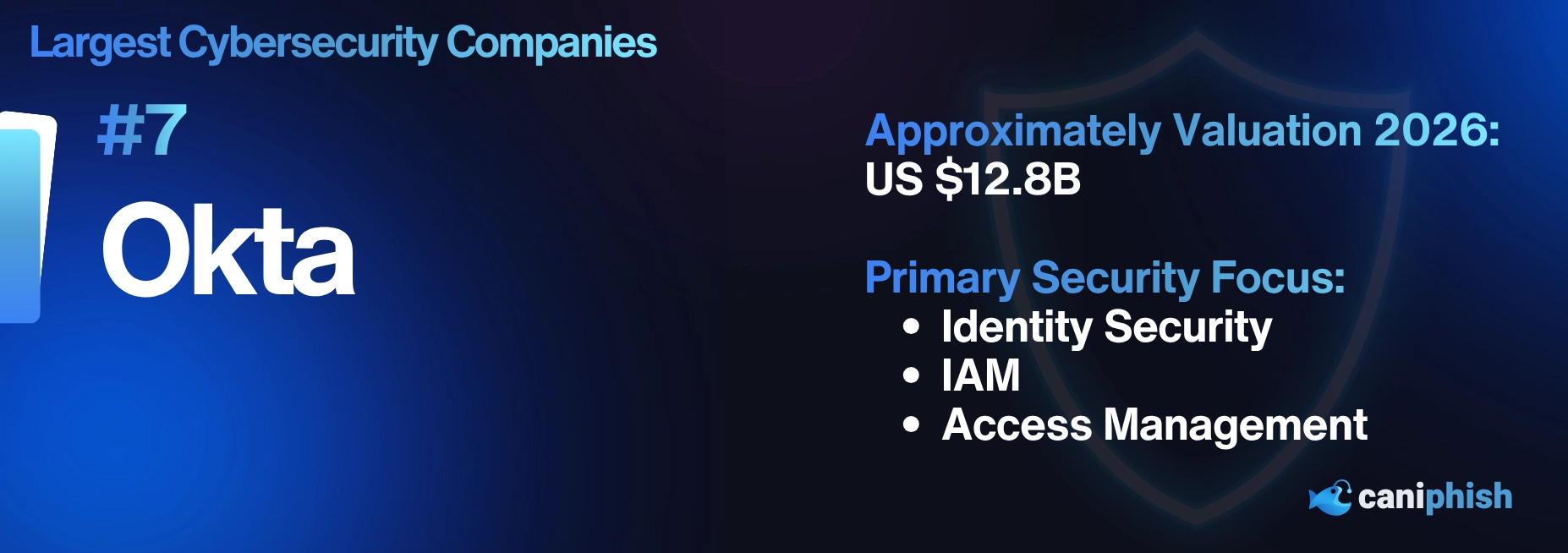
Okta doesn't just protect data, it protects who gets to see it.
Established in 2009, Okta built its name on single sign-on (SSO), multi-factor authentication (MFA), and identity and access management (IAM) that worked and made sense.
If you've ever landed on a "Sign in with Okta" screen before getting near a company dashboard, payroll system, congrats! You've already brushed up against its reach.
This is the team that took Identity-as-a-Service (IDaaS) from niche to necessary, long before Zero Trust became every vendor's favorite punchline. Okta made identity the front door of cybersecurity and then reinforced it with steel.
Today, Okta is securing thousands of customers, bringing in billions in revenue, and still leading the identity space, even as Microsoft, Ping, and startups nip at its heels. It is the gatekeeper at the cloud's front door. And when identity is your first line of defense, you want Okta standing there beside you.
#8. Rubrik
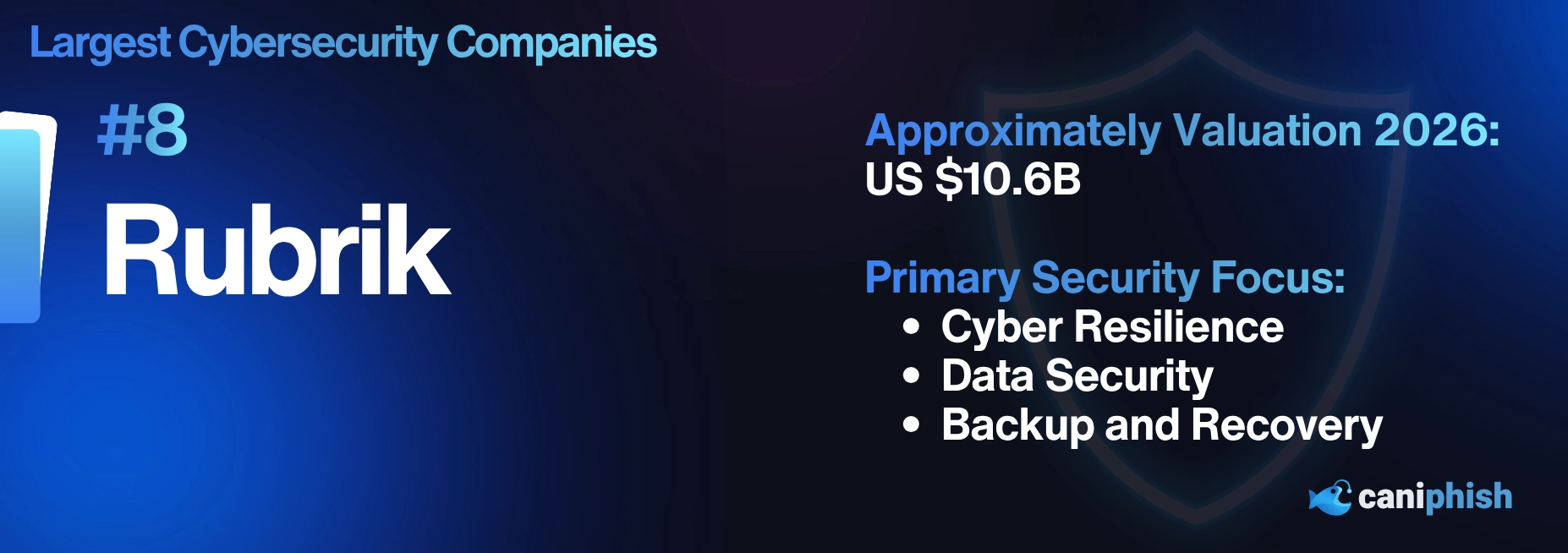
Remember when backup used to be the boring part of security? Rubrik has done a good job of making it matter again. It helped push cyber resilience, ransomware recovery, and data protection much closer to the center of the security conversation.
Today, that matters more than ever. Ransomware is still hitting businesses hard, so the ability to recover quickly can make a huge difference.
As of April 2026, Rubrik was valued at roughly $10.6 billion, with fiscal 2026 revenue hitting $1.32 billion and subscription ARR climbing to $1.46 billion. Not bad for a company many people still wrongly think of as “just backup.”
Rubrik stands out because it's not just about storing copies of data and hoping for the best. It's about helping businesses recover fast, limit damage, and get back on their feet when something goes wrong.
When attackers go after your data, backup stops being boring admin stuff and starts looking a lot more like a survival plan. The faster a business can recover, the less damage the attacker gets to enjoy.
Rubrik might be lower on the list, but it's one of the easier ones to justify.
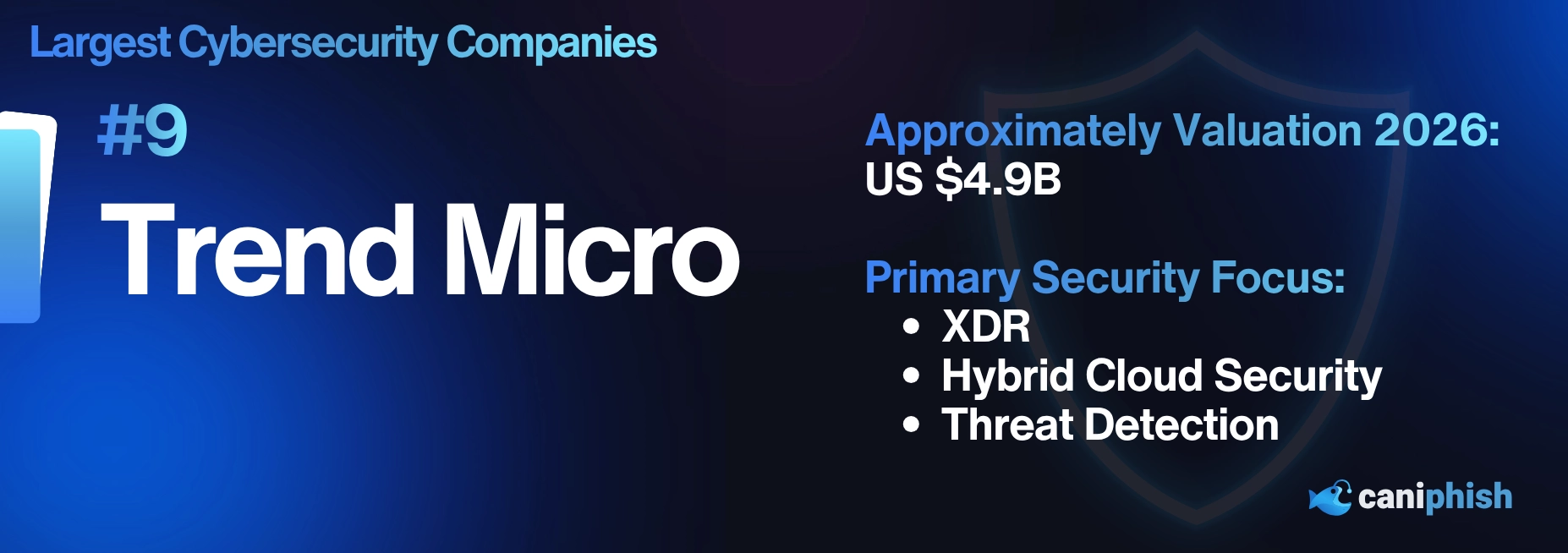
#9. Trend Micro
Trend Micro is one of those companies that has been in cybersecurity for ages, and it still manages to stay relevant.
Founded in 1988, it has shown it knows how to evolve. In 2026, it remains a serious player in hybrid cloud security, threat intelligence, and XDR. It is especially useful for larger organizations trying to secure a mix of on-prem and cloud environments. The platform covers a ton of ground too, from endpoints and servers to networks and email.
Its flagship platform, Trend Vision One, now anchors its XDR and attack surface risk management play. That's a fancy way of saying it helps security teams see the whole threat picture fast and shut it down before it spreads.
With over 500,000 customers globally and partnerships with hyperscalers like AWS, Microsoft, and Google, Trend Micro's got street cred and cloud cred. It's still worth billions, proving that consistency, innovation, and a global footprint still matter.
Trend Micro builds the tech that quietly and effectively stops threats... which is exactly what you want.
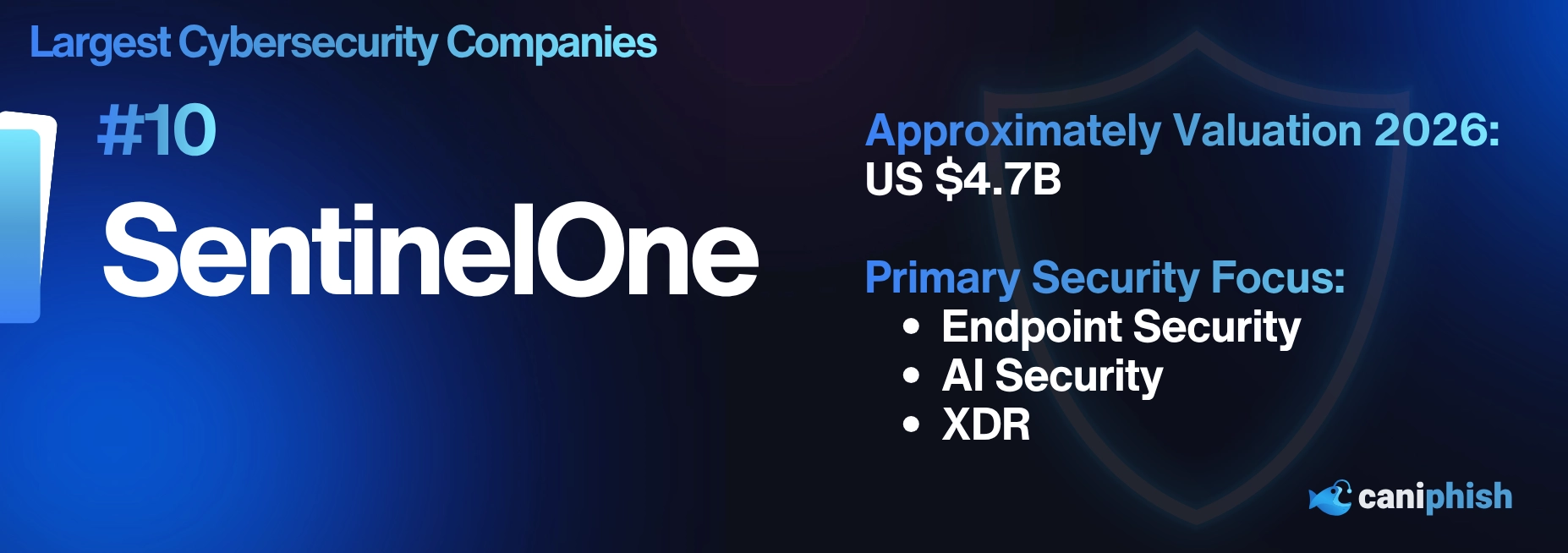
#10. SentinelOne
This company has earned a spot on the list by proving there is still plenty of room in cybersecurity for a player that moves fast, hits hard, and doesn't need 50 different products just to prove a point.
Its Singularity platform is the thing that really made SentinelOne stand out. It covers endpoints, cloud, and identity, giving security teams a solid view of what is happening when things start to go pear shaped. It is built for speed too, with fast detection, fast response, and the kind of visibility you want before a small problem turns into a full blown mess.
It has the numbers to justify its place, reporting just over $1 billion in 2026 revenue, with annual recurring revenue reaching about $1.12 billion. Not bad for a company founded in 2013 and still climbing into the top tier of the market.
It has scale, momentum, and the kind of platform that makes sense for where modern security is heading.
Wrapping Up
So there you have it!
The 10 largest cybersecurity companies dominating the digital battlefield in 2026.
Some are building the future of Zero Trust. Others are reshaping identity, endpoint, and infrastructure security.
But one thing's for sure... They've all earned their spot on this list by doing one thing really well: making attackers' lives a nightmare.
Now go update your firewall and check your MFA settings. We'll be back with more lists, lures, and lessons from the phishing front lines.

The Top 13 AI Documentaries In 2026
Uncover the dark side of artificial intelligence, minus the Hollywood lasers.
Check out our top picks
An Operations Analyst on a mission to make the internet safer by helping people stay a step ahead of cyber threats.